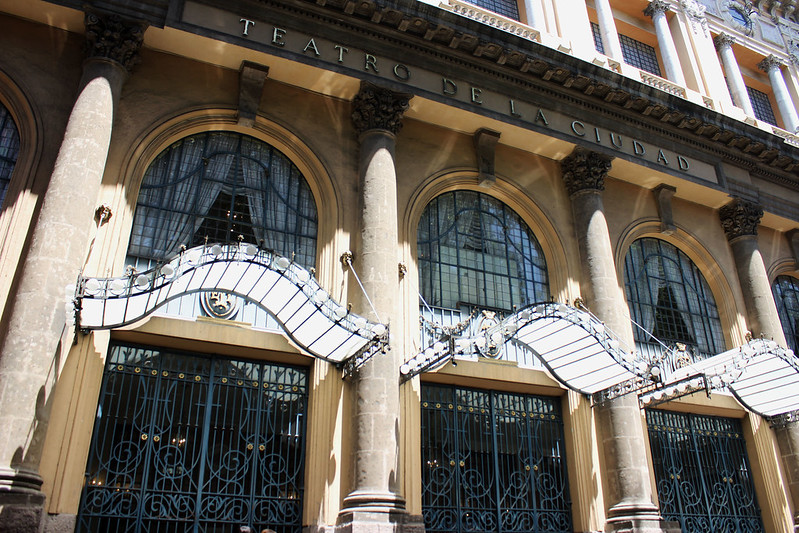
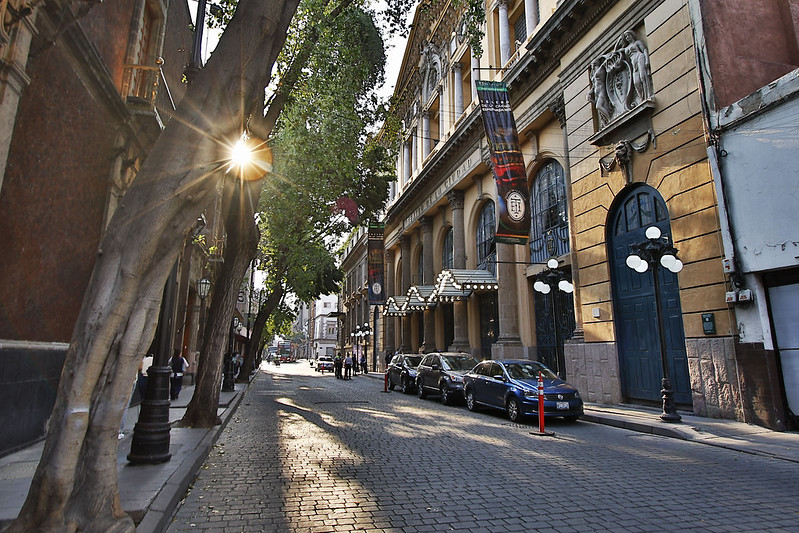
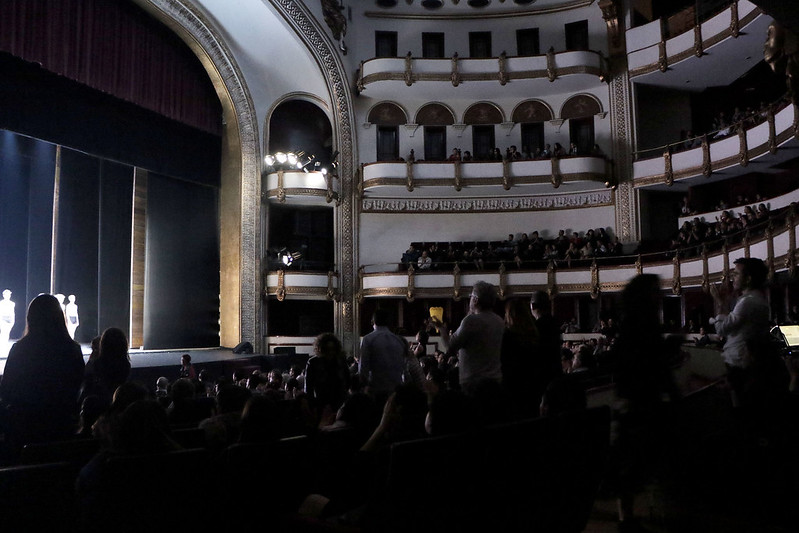
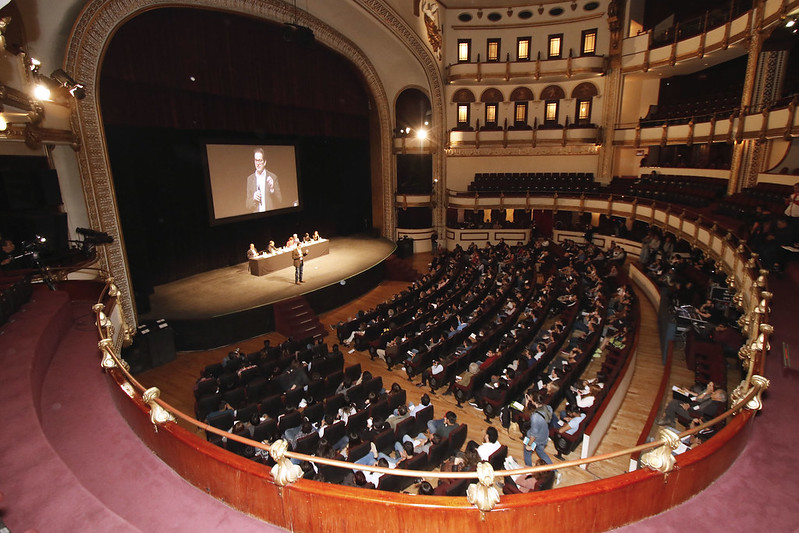
The building anchored on Donceles Street is a period forum dedicated to the performing arts. Its neoclassical facade and its interiors with columns, ornamental details, antique chandeliers, and reddish velvet seats provide an imposing aesthetic frame for the acoustic or theatrical acts that occur under its stage arch.
The current building was built at the beginning of the 20th century by the then famous Mexican actress and singer (also known as the “Queen of the Operetta”), Esperanza Iris, who inaugurated the theater in 1918. She built it to replace the Xicoténcatl Theater, which had been in the same place since the 19th century. Architects Federico Mariscal and Ignacio Capetillo y Servín designed and built the new theater.
The venue became the most important theater in the city and the country. It regularly hosted important national and international artists. Unfortunately, a serious fire almost destroyed it in 1984. Recognizing the importance of the place, the city government restored it and reopened its doors in 1999.
The sonic curation supported by capital cultural institutions is wide. The venue programs tango orchestras, vocal ensembles, flamenco singing, instrumental contemporary jazz, and alternative artists in an “unplugged” format. The acoustics of the theater’s horseshoe design direct the sound from the stage toward the upper levels and balconies. In addition, it is famous for presenting top-level works in disciplines such as dance, theater, opera, operetta, zarzuela, interdisciplinary shows, cinema, festivals, and all kinds of large-format productions.
The audience is rotating and diverse, attracting attendees interested in shows and festivals who value the splendor of the capital’s historical monuments. Behavior usually conforms to theatrical protocols: listen attentively, turn off mobile notifications, and maintain the assigned seat.
To preserve the historic fabrics and furniture, the entry of food or drink into the seating and amphitheater area is strictly restricted. The lower lobby provides in an auxiliary way (subject to availability and season) limited options for the sale of bottled waters in the common areas during the intermissions.
The street box offices operate during daytime hours for ticket sales in their different sections (orchestra, first floor, amphitheater, and gallery), options that can also be purchased through commercial digital systems.
 +525517193000
 http://teatros.cultura.cdmx.gob.mx/

Nearest at 0.05 kms.
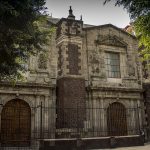
Nearest at 0.05 kms.
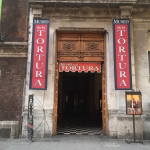
Nearest at 0.07 kms.
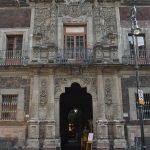
A modern graphic collection in an outstanding Baroque palace from the 18th century.
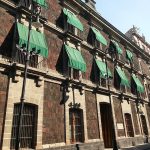
Mexico's National College is dedicated to the free sharing of knowledge and learning.

One of Mexico City's oldest continually running theaters, the Fru Fru has a reputation, and a legendary status.
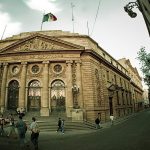
A Donceles palace is home to Mexico City's Legislative Assembly, a storied Neoclassical complex.
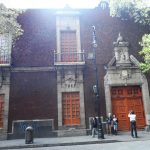
Among the most noteworthy of architectural sites on the Calle Donceles, much better known for its used booksellers.