The Mexican capital is the only metropolis on the planet to host three FIFA World Cups (1970, 1986, and 2026). The World Cup reconfigures the city, demonstrating that Mexico City is an unparalleled host, and in this edition, it prepares to dazzle the world by showing that football is deeply intertwined in its collective memory and its renowned capacity to celebrate.
The Government of Mexico City and the Organizing Committee have articulated a vast agenda that expands the World Cup passion in a network of 35 Football Festivals. Conceived as safe and family-friendly spaces across the 16 boroughs, these centers of coexistence will offer everything from the live broadcast of the tournament’s 104 matches to community tournaments, sports activations, and a delicious gastronomic offer.
Parallel to the football euphoria, the capital will deploy a “Cultural Corridor” that invites reflection, demonstrating that sports and fine arts share the same emotion. The metropolis will host more than twenty world-class exhibitions in various museums and public spaces. The visitor will be able to travel from the remote past admiring 3,600-year-old Mesoamerican rubber balls, to delving into avant-garde installations focused on equality. Venues like the Yancuic Museum, the Museum of Mexico City, and the iconic Dolores Olmedo Museum will become mirrors of our identity, exploring football from archaeology, fashion, contemporary art, and hemerographic nostalgia.
The transformation of the city also encompasses a robust circuit of high-level entertainment and experiences designed to captivate tourism. The agenda fuses sports with pop culture, hosting international sports industry summits, fashion shows that exalt Mexican crafts, exhibitions of historical legends, and a series of concerts featuring world-class talent. Added to this are massive events on the streets, such as the historic call to citizens to break the Guinness World Record by forming “The largest wave in the world” on Paseo de la Reforma, as well as the monumental FIFA Fan Fest™ that will take over the Zócalo square as the vibrant heart of the 2026 World Cup.
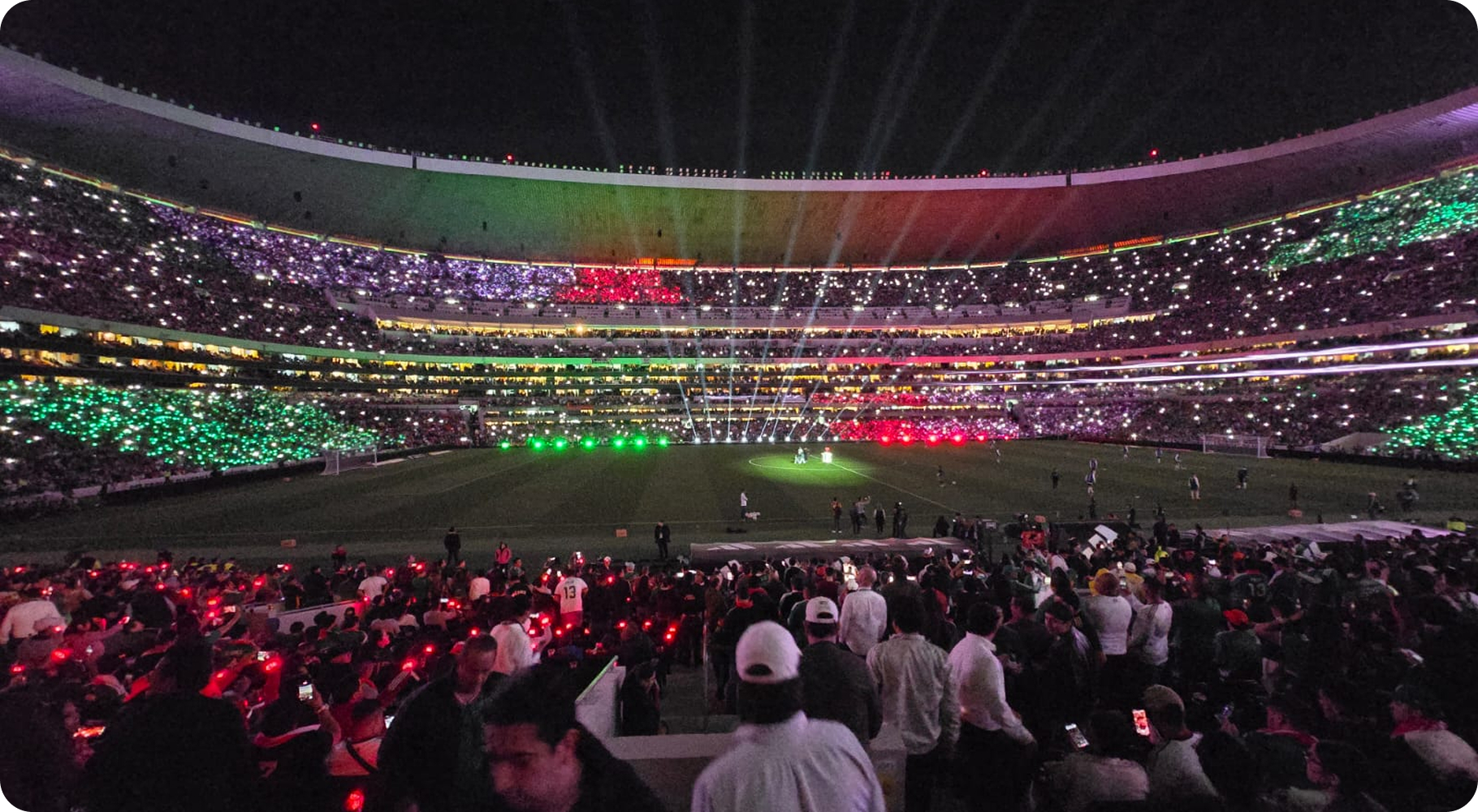
The heartbeat of this World Cup month, of course, will emanate from the capital’s legendary fortress: the Mexico City Stadium (Estadio Banorte). The only venue in the world to have seen historical giants crowned, the great “Colossus of Santa Úrsula” reopens its doors after a necessary architectural and technological remodeling. Its renovated stands, its state-of-the-art connectivity, and its imposing acoustics will be the stage for five official matches, consolidating the city as a global football benchmark.
Finally, the true triumph of this tournament will not be measured solely in minutes of play, but in the social infrastructure project that will leave an indelible legacy. Through a comprehensive rehabilitation program of nearly 320 modules, neighborhood courts, and community parks in the peripheral and working-class areas of the metropolis. Both for the international visitor setting foot on chilango land for the first time and for the capital resident who breathes football daily, this guide condenses the World Cup offer. Here you will find the dates, official venues, and links for each event so you can plan a perfect itinerary in the “City three times World Cup host with a great heart”.
Learn more: