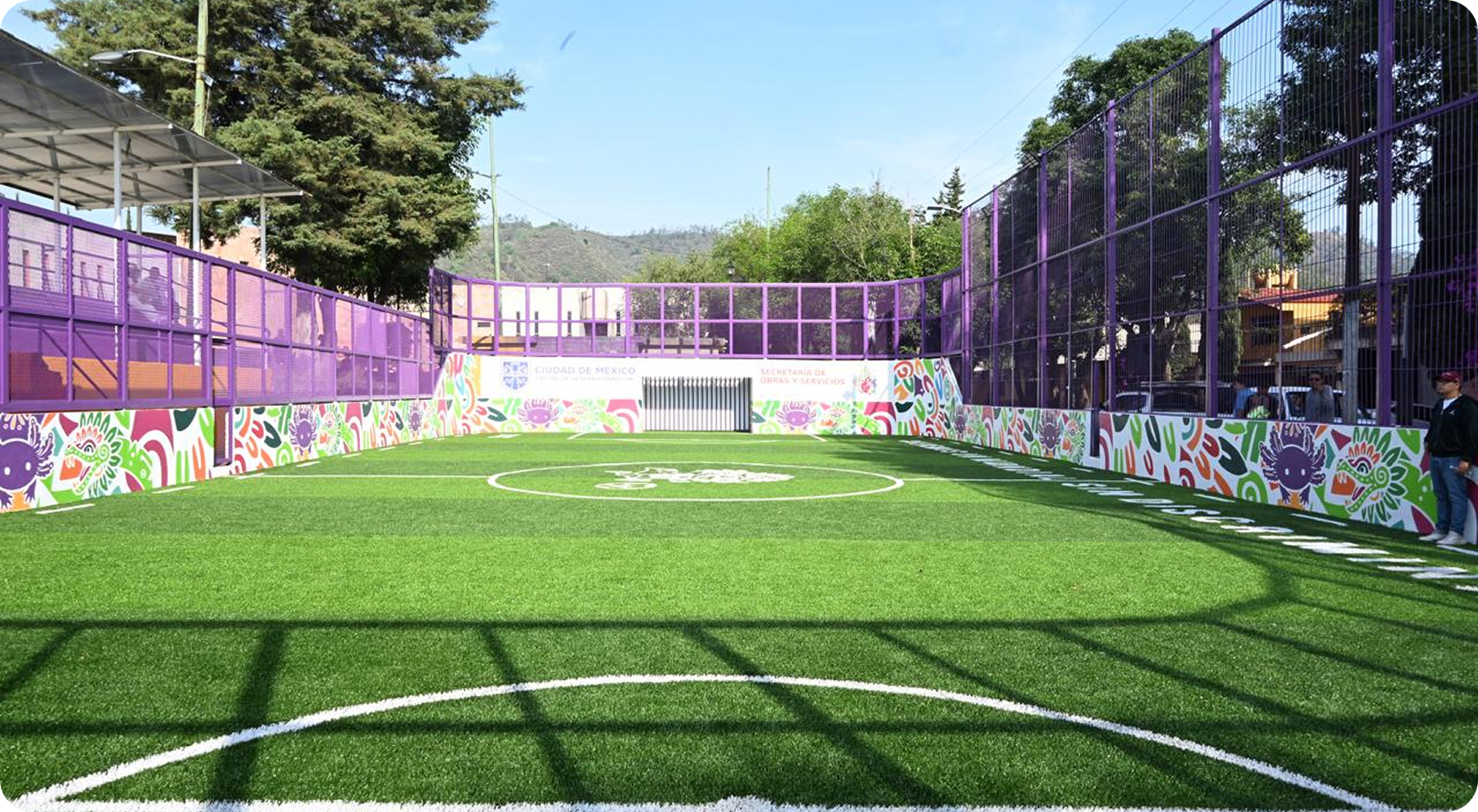
The lights of the World Cup will turn off in July, but the impact of this cup will endure for generations. The Government of Mexico City undertook a program for the total rehabilitation of nearly 320 courts, neighborhood sports centers, and recreational modules in various areas of the metropolis. This effort seeks to steer youth away from violence, promote public health, and foster sports.
Breakdown by Boroughs:
Iztapalapa: The eastern borough was the spearhead of the project. Multiple modules were repaved and illuminated in the area of the Culhuacanes, Las Torres, the Vicente Guerrero Module, Cuitláhuac Park, and the complexes on the slopes of the Sierra de Santa Catarina.
Álvaro Obregón: A monumental social engineering job was carried out in the west, rescuing abandoned spaces in ravines and dignifying historic areas like Plateros, the Jalpa Module, San Clemente, and the San Patricio Battalion.
Coyoacán: A sports renaissance for the south of the city. The emblematic working-class neighborhoods of Pedregal de Santo Domingo, Santa Úrsula, the medians of Aztecas Avenue, and Deportivo Huayamilpas boast new synthetic grass and high-power reflectors.
Tlalpan: Comprehensive rescue of neighborhood parks and fast football modules along the Picacho-Ajusco Highway, in addition to the recovery of playful spaces under the vehicular bridges of the south.
Milpa Alta and Xochimilco: The program also embraced the capital’s original villages. Distant communities like San Salvador Cuauhtenco, San Pablo Oztotepec, and the central modules of Xochimilco now have top-level courts for their Sunday leagues.
Rest of the Capital: Strategic interventions in Cuauhtémoc, Gustavo A. Madero, and Azcapotzalco complete this project.
Today, Mexico City is not only ready to dazzle the world as the best host but has guaranteed that the ball keeps rolling in each of its neighborhoods and colonies.