

Coyoacan
Coyoacán forged its identity as a key city under the rule of the Tepanec empire, a powerful military and commercial civilization that controlled the Valley of Mexico before the rise of the Mexica. Baptized with a Nahuatl word that means "place of the owners of coyotes," the demarcation underwent a profound transformation by establishing itself as the first New Spanish city council, officially founded in 1521. Original 16th-century layouts still delimit its twin squares: Jardín Hidalgo and Jardín Centenario. Facing them, the Parish and Ex-Convent of San Juan Bautista dominates the landscape with its tree-lined atrium, a Renaissance-heritage facade, and an interior decorated with frescoes of high historical value.
Famous for its artistic tourism, the Casa Azul safeguards the intimate universe where Frida Kahlo was born, lived, and produced her fundamental work. Complementing this legacy, the "Casa Roja" or Casa Kahlo Museum stands out on Aguayo Street, an independent venue to the famous blue mansion that offers an immersion into the painter's history and family heritage. The Leon Trotsky House Museum, a venue that keeps intact the final refuge of the Russian revolutionary leader. Popular culture and living traditions are found at the National Museum of Popular Cultures through temporary exhibitions dedicated to the art of deep Mexico. Walking along Francisco Sosa Avenue allows you to admire dozens of beautiful viceregal mansions until reaching the Santa Catarina Neighborhood, whose cobblestone square and yellow-facade chapel transport visitors into a Magical Town atmosphere.
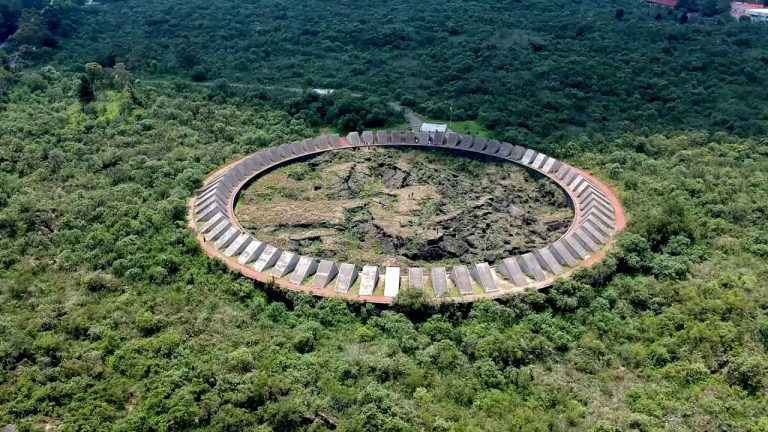
Ciudad Universitaria holds the title of World Heritage Site granted by UNESCO. The central campus of the UNAM masterfully integrates architecture and visual arts through the monumental murals of Juan O'Gorman in the Central Library and the high reliefs of David Alfaro Siqueiros in the Rectory Tower. The volcanic rock of the Pedregal serves as the base for the Sculptural Space, an environmental art intervention immersed in the ecological reserve. Adjacent to this area, the University Cultural Center maintains one of the richest billboards in the capital in cinema, music, dance, exhibitions, and theater.
International-scale venues define the landscape of the south at the Estadio Banorte. Located in the ancient territory of Santa Úrsula Coapa, the colossus designed by architects Pedro Ramírez Vázquez and Rafael Mijares was inaugurated in the 20th century and stands out for being the only stadium on the planet to host three FIFA World Cups. The functionalist design of its concrete structure and its capacity for more than eighty thousand spectators consolidate it as an icon of Mexican engineering, serving as the primary stage for memorable sports and entertainment events.
The Viveros de Coyoacán constitutes the main green refuge in the area; its trails, surrounded by trees intended to reforest the city, are the favorite site for morning sports. Millennial history is present in the Plaza de la Conchita, which houses one of the oldest chapels in the city built on an ancient ceremonial center. The monumental dark stone design distinguishes the Anahuacalli Museum, conceived by Diego Rivera to safeguard his vast collection of archaeological pieces in a building that emulates the geometry of a teocalli.
Gastronomic rituals in the neighborhood fuse the market's seasoning with deeply rooted establishments. The Coyoacán market attracts crowds every day thanks to its famous tostadas de guisados and fried quesadillas. The aroma of roasted coffee beans guides visitors to emblematic coffee shops, where tradition dictates pairing the coffee with freshly made churros. Contemporary Mexican cuisine restaurants and old cantinas surrounding the main gardens close the route, offering traditional dishes among their beautiful colonial courtyards.
1 - 12 de 15 lugares