Boroughs, neighborhoods, and colonies
Mexico City, founded in 1325 when the Great Tenochtitlan emerged on a system of islets in the vast Lake Texcoco, amazed the world with its intricate network of canals and causeways, and laid the foundations of a geography that has been transformed over seven centuries.
After the viceregal era, the 1824 Constitutive Act of the Federation defined an initial core of 8,800 acres centered on the Zócalo.
Growth remained gradual until, in 1848, the territory experienced an expansion that increased its size almost eightfold, integrating the southern mountainous areas to secure the passes to the basin.
Currently, the metropolitan landscape has consolidated into an immense community network encompassing 1,812 colonies and 55 officially recognized original villages.
The urban layout features 21 Magical Neighborhoods (Barrios Mágicos) that safeguard their heritage against the passage of time.
Politically, the city is organized into 16 boroughs (alcaldías) that are the epicenters of social life, fusing their ancestral legacy with renowned works of contemporary architecture and the largest network of social infrastructure projects in its history.
Álvaro Obregón
Made up of 257 colonies, this demarcation guards a geographic contrast where ravines and wooded areas converge with residential zones.
The Magical Neighborhood of San Ángel is its main heritage jewel, attracting visitors to the cobblestone streets surrounding the Museo de El Carmen and Plaza San Jacinto.
To the south, the volcanic rock landscape of the Pedregal sustains fundamental works of architectural functionalism, such as the Max Cetto Studio House and the Museo de Arte Carrillo Gil (MACG).
The social fabric is strengthened through recreational centers in key areas, complementing nature tourism at the borders of the Desierto de los Leones National Park.
Azcapotzalco
The ancient Tepanec empire embraces 111 colonies in the northwest of the capital, standing out as an industrial and logistics hub in constant renewal.
Its historic core preserves a profound tranquility around the Jardín Hidalgo and the Casa de Cultura.
Nearby, the Old Dominican Convent coexists with the Fray Bartolomé de las Casas library, which houses an iconic mural by Juan O’Gorman.
State-of-the-art mass entertainment venues, such as the Arena Ciudad de México, dialogue with extensive green circuits like Tezozómoc Park.
The social avant-garde is materialized with its new Utopía in the Euskadi colony, a complex whose main vocation is Technology and Robotics.
Benito Juárez
A residential and commercial epicenter grouping 56 colonies, recognized for possessing the highest connectivity and the highest human development index in the metropolis.
Its dynamic corridors house buildings such as the World Trade Center and the Polyforum Cultural Siqueiros, custodian of "The March of Humanity," considered the largest mural in the world.
The demarcation is the undisputed destination for large-scale events thanks to the Monumental Plaza de Toros México and the Estadio Ciudad de los Deportes.
Furthermore, it guards fundamental venues for the seventh art such as the Cineteca Nacional in the town of Xoco, and nature spaces like Parque Hundido and Parque de los Venados.
Coyoacán
The intellectual soul of the capital gathers 137 colonies and safeguards various original villages.
It is a global tourist magnet, famous for the central campus of Ciudad Universitaria (a World Heritage Site), the Frida Kahlo Museum, the Anahuacalli Museum, and the Leon Trotsky Museum.
Adding to the iconic cultural offer is the recent Casa Kahlo Museum "La Casa Roja", located at 54 Aguayo Street; this renovated space delves into the family genealogy and safeguards Guillermo Kahlo's old darkroom, as well as other pieces from Frida and her family.
The 2026 World Cup modernized the Colossus of Santa Úrsula, now under the name Estadio Banorte.
Community development continues its expansion with the planning of the new Utopía in the San Lucas Neighborhood, focused strictly on cultural promotion.
Cuajimalpa de Morelos
Mystery, nature, and modernity coexist in the western mountains through its 44 colonies and 4 original villages.
The Desierto de los Leones National Park and its Carmelite ex-convent serve as an inexhaustible refuge for ecotourism, climbing, and hiking.
A short distance away, the horizon changes radically with corporate skyscrapers, exclusive shopping centers, and the landscaping of Parque La Mexicana in Santa Fe.
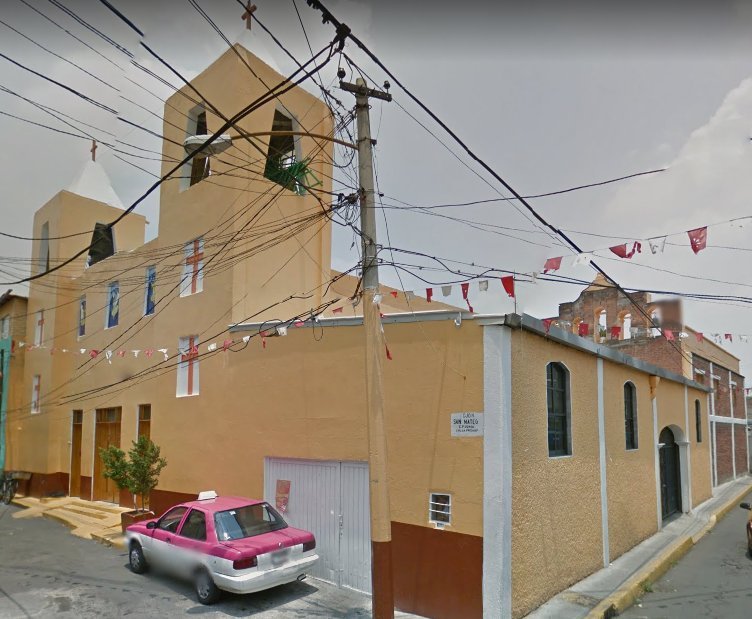
Communities such as San Mateo Tlaltenango and San Lorenzo Acopilco keep their traditions alive.
Cuauhtémoc
The foundational heart encloses the historical essence of the country in its 33 colonies, from the Templo Mayor and the Zócalo, to the Palace of Fine Arts and the Monument to the Revolution, the borough is a living museum.
National memory is preserved in the Plaza de las Tres Culturas in Tlatelolco, while cosmopolitan neighborhoods like Roma, Condesa, and Juárez dictate trends in design and gastronomy.
Community innovation transforms the east of the demarcation by integrating models of urban well-being such as the Utopía Tepito (La Mariposa), in these areas of profound popular identity.
Gustavo A. Madero
The vast northern border houses 234 colonies and is home to the most important religious tourism on the continent thanks to the Basilica of Guadalupe, erected at the foot of the Tepeyac hill.
The historic Calzada de los Misterios connects this sacred area with the center of the city.
The modernity of the metropolis is admired from above on Cablebús Line 1, which links the upper area of Cuautepec with Indios Verdes.
The rehabilitated wetlands of the immense Bosque de Aragón offer a sanctuary for biodiversity.
Inclusive development is strengthened with the opening of the Utopía in the San Juan de Aragón VII Sección colony, a complex with a recreational, technological, and educational vocation that revitalizes the quality of life in the area.
Iztacalco
The territorially most compact demarcation groups 38 colonies and reigns as a destination for mass entertainment and sports.
The Autódromo Hermanos Rodríguez, the Alfredo Harp Helú Stadium, and the Palacio de los Deportes attract world-class tourism.
In the Granjas México colony, the Magdalena Mixiuhca complex now integrates the amazing Utopía Mixiuhca, a magnificent work of social urbanism of eighty thousand square meters that offers a semi-Olympic pool, go-kart tracks, themed islands, and a comprehensive free care system.
Simultaneously, the Historic Center of Iztacalco protects the viceregal layout of its seven original neighborhoods and the Ex-Convent of San Matías.
Iztapalapa
A global benchmark for social urbanism with 293 colonies and a network of Utopías with international recognition by UN-Habitat and the Holcim Foundation, due to its impact on sustainable development, social inclusion, and the transformation of public spaces.
The borough boasts the recent Yancuic Museum, an interactive venue for children and young people in Constitución de 1917, which joins attractions such as the Barco Utopía, Ixtapasauria (in the Utopía Meyehualco), and the Planetarium of the Utopía Libertad.
Nature and faith tourism stands out at the Cerro de la Estrella, the site of the New Fire ceremony and the Passion of Christ, while Parque Cuitláhuac is today the sustainable lung of the east.
Cablebús Line 2 offers a tour of the world's largest urban art museum from above.
La Magdalena Contreras
An ecological sanctuary south of the city with its 53 colonies and 4 original villages, standing out as the guardian of the capital's last open-air living river: the Magdalena River.
The steep canyons and trails of the Los Dinamos National Park attract thousands of climbing, camping, and mountain biking practitioners.
Archaeological zones such as Mazatépetl reaffirm the region's Otomi heritage.
Respect for the environment guides its new social projects, materialized in the Utopía of the Lomas de San Bernabé colony, a space with a strictly environmental and natural observation vocation.
Miguel Hidalgo
The city's avant-garde borough comprises 81 colonies and houses the highest concentration of world-class venues.
The immense Bosque de Chapultepec, interconnected by Cablebús Line 3, integrates the Environmental Culture Center and the Community Culture Pavilion.
Its inexhaustible offer adds the Cineteca Nacional Chapultepec, the Scenic Garden next to the National Auditorium, and the amazing PARCUR dedicated to urban art.
Polanco shines globally with the exclusivity of Masaryk Avenue, the Soumaya Museum, and the Jumex Museum.
The neighborhood fabric drives youth development through the new Utopía Un Hogar para Nosotros, located on the México-Tacuba Causeway.
Milpa Alta
A vast natural and agricultural reserve made up of 12 original villages that serve as the main conservation area of the southern basin.
Internationally famous for the massive production of nopal and for the delights of the National Mole Fair in San Pedro Atocpan, the borough preserves intact pre-Hispanic traditions, as well as its luminous cantoya balloon festivals.
Food sovereignty and culture converge in the Utopía of the Potrero del Llano colony, a space designed specifically to safeguard and promote the demarcation's traditional festivals and fairs.
Tláhuac
The transit of Metro Line 12 over wetlands and chinampas illustrates the identity of this demarcation composed of 50 colonies and 7 original villages.
Its immense cultural wealth stands out globally thanks to San Andrés Mixquic, famous for the mysticism and color of its alumbrada (illumination) on the Day of the Dead.
Tláhuac manages to balance modernity with its ancestral lacustrine system through initiatives such as the Utopía El Triángulo (Tláhuac Avenue), an extensive free public space designed with a vocation dedicated to the celebration of community parties, comparsas, and carnivals.
Tlalpan
The largest demarcation of the capital, made up of 162 colonies and various mountain towns, allocates eighty percent of its territory to the conservation of the Ajusco forests, which are fundamental for the water balance.
In its Historic Center, it attracts tourists with its traditional cafes and viceregal buildings.
The archaeological heritage finds its highest expression in the circular pyramid of Cuicuilco.
Social innovation reaches the agricultural areas through the Utopía in the San Miguel Topilejo colony, called the "Utopía of Corn," an avant-garde center focused on environmental protection.
Venustiano Carranza
Commerce inhabits the 80 colonies of this eastern demarcation, home to the famous markets of La Merced, Sonora, and Jamaica, indisputable pillars of metropolitan supply and floriculture.
The Lecumberri Palace safeguards national memory through the General National Archive.
It is also the cradle of the sonidero movement and the historic Peñón de los Baños.
The social future of the borough is enhanced by integrating neighborhood development poles such as the Utopía Ampliación 20 de Noviembre, a venue dedicated entirely to promoting social inclusion and the well-being of vulnerable sectors.
Xochimilco
Recognized by UNESCO as a World Heritage Site, this territory preserves the agricultural ingenuity of Tenochtitlan in its 14 original villages, 17 traditional neighborhoods, and nearly 100 colonies.
The trajinera rides from its mythical piers are complemented by the Xochimilco Ecological Park and the immense floriculture activity of markets like Cuemanco and Madre Selva.
The valuable art collection of the Dolores Olmedo Museum and the 16th-century architectural jewels, such as the Ex-Convent of San Bernardino de Siena, complete an indispensable experience that resists the advance of the city by protecting its lacustrine ecosystem.
Emblematic Neighborhoods
Beyond its territorial and administrative division, the true essence of Mexico City is experienced at the street level, walking through its endearing neighborhoods.
Each of them has its own personality and an unmistakable atmosphere, forged by its historic architecture, its gastronomic offer, its traditional markets, and the joy of its people.
Walking to the cosmopolitan and sophisticated rhythm of Polanco to the bohemian and creative spirit of Roma and Condesa;
from the profound monumental weight of the Historic Center to the viceregal romanticism that is still breathed in the squares of Coyoacán and San Ángel. Below, you will find a careful selection of the most touristy and emblematic neighborhoods in the capital, corners that invite the traveler to get lost among their streets and discover the City of the Great Heart.
Discover the maps and guides divided into five zones of Mexico City


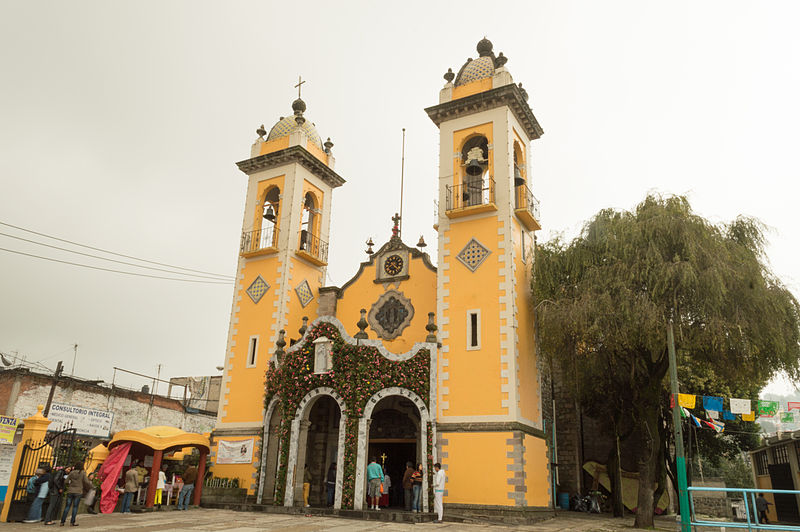
 Rafael Checa S/N, Santa Rosa Xochiac, Álvaro Obregón, 01830 CDMX
  Towns/Neighborhoods