Historic Center (21 places)
The Historic Center is the heart where the capital was born and reinvents itself day by day. Declared a Cultural World Heritage Site by UNESCO, the vibrant polygon is an immense living museum that condenses over seven centuries of history in its streets, squares, and facades. Walking through its cobblestone corridors is embarking on a tangible journey through time: here, the ancient foundations of the Mexica empire coexist with the majesty of viceregal baroque, the elegance of 19th-century palaces, and the first marvels of 20th-century modernity. Delving into this political, spiritual, and cultural epicenter allows you to discover firsthand the monumental art, legends, and inexhaustible energy of a metropolis built on lacustrine terrain.
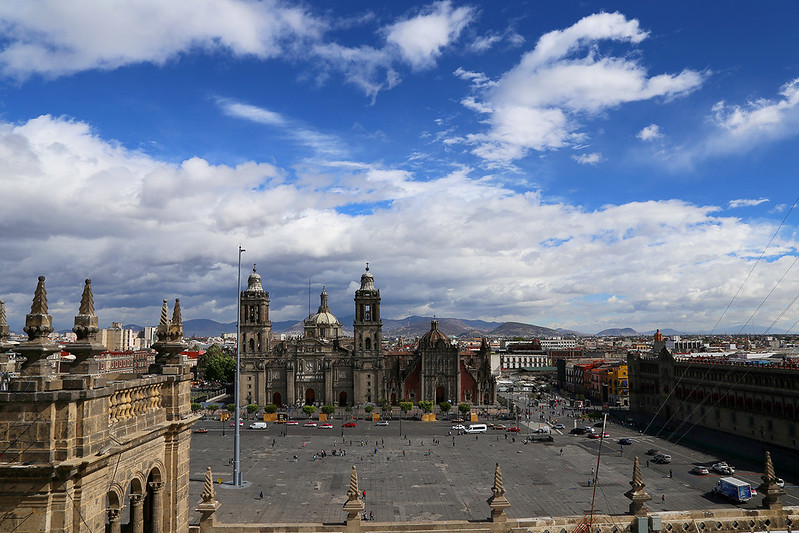
1. Zócalo (Plaza de la Constitución) The Zócalo, officially Plaza de la Constitución, is one of the largest squares in the world and the historic heart of Mexico. Sitting on the ancient ceremonial center of Tenochtitlan, this imposing space has safeguarded the country's memory since 1325. It is a site that concentrates the three powers defining our identity: the spiritual at the Metropolitan Cathedral, the political at the National Palace, and the civil at the Old City Hall. It stands out for its monumental flag and for being the main stage of the most important civic celebrations.
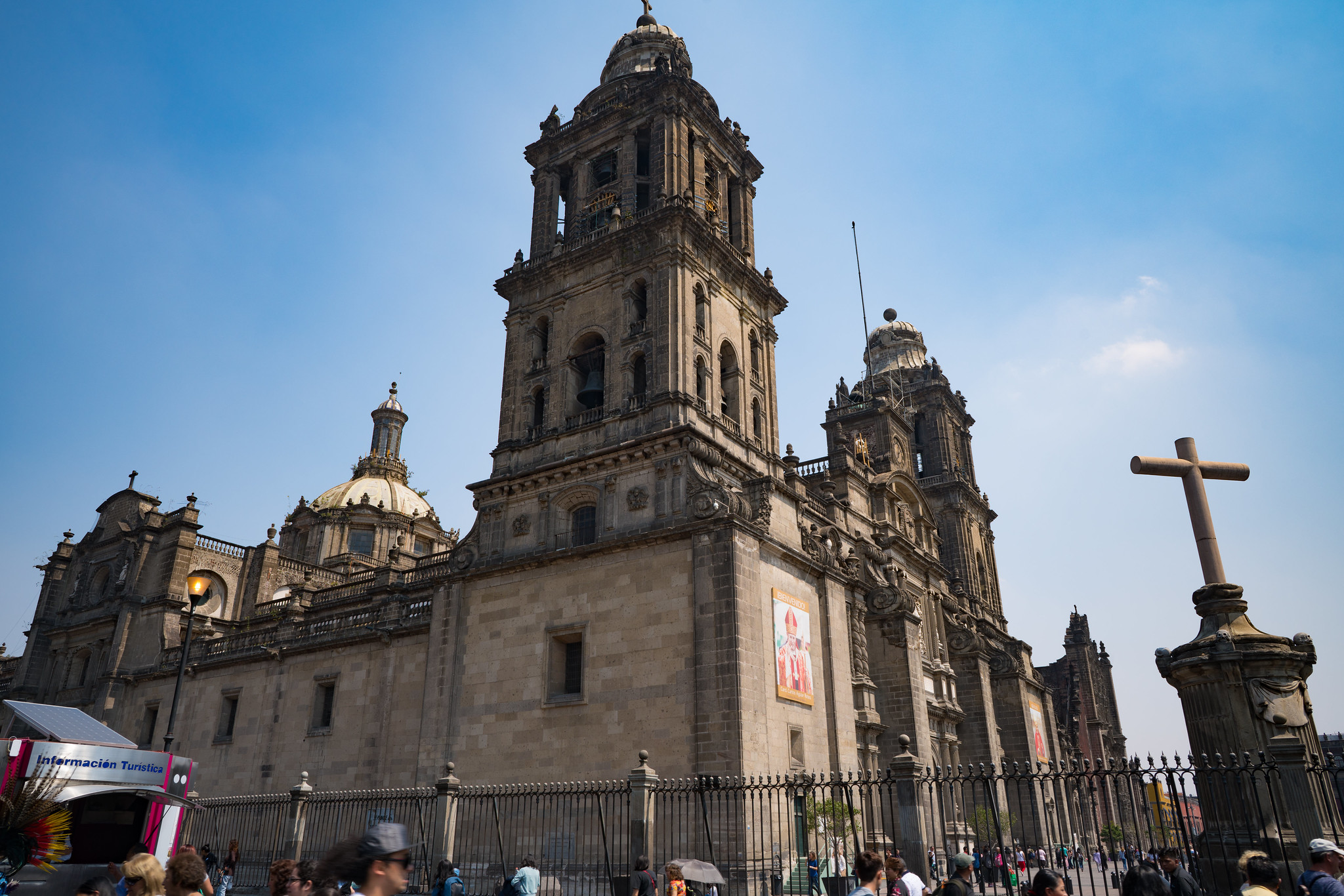
2. Catedral Metropolitana The Metropolitan Cathedral is the ultimate architectural jewel that fuses baroque and neoclassical styles in continental America. Its construction began in 1573 on the remains of the Mexica sacred precinct and took almost 250 years to complete, under the mastery of architects like Manuel Tolsá. The venue dazzles visitors with its Altar of the Kings and its imposing 18th-century organs. A fascinating aspect is its continuous resistance to the sinking of the lacustrine soil, demonstrating extraordinary structural resilience. Visiting it means wandering through centuries of faith, art, and history.
3. Palacio Nacional The National Palace is the current epicenter of executive power, originally built in 1522 over the ruins of Moctezuma II's New Houses. The monumental red tezontle facade frames the iconic balcony where the Bell of Dolores is rung every September 15th. Inside, the building houses murals by Diego Rivera, a masterpiece narrating the epic of the Mexican people.
4. Templo Mayor The Templo Mayor was the spiritual and political core of ancient Mexico-Tenochtitlan, founded in 1325 on the site where, according to legend, the eagle was found perched on the cactus. This majestic pyramid was consecrated to Tláloc and Huitzilopochtli, symbolizing cosmic balance. Its rediscovery in 1978 revolutionized national archaeology, revealing seven superimposed construction stages and priceless treasures such as the monolith of the goddess Coyolxauhqui. Walking among its vestiges and exploring the site museum offers a mystical experience to connect directly with the profound pre-Hispanic past.
5. Palacio de Bellas Artes The Palacio de Bellas Artes is the country's most important cultural venue and a masterpiece that fuses an art nouveau exterior with an art deco interior. Construction began in 1904 and concluded in 1934, following the revolutionary pause. The building is renowned for its unique glass curtain, crafted by the Tiffany firm, as well as housing imposing murals by Diego Rivera, David Alfaro Siqueiros, and José Clemente Orozco. It is the absolute symbol of the performing arts and capital creativity.
6. Torre Latinoamericana Inaugurated in 1956, the Torre Latinoamericana is an unmistakable urban symbol and a marvel of structural engineering worldwide. Built on the grounds of Moctezuma II's ancient zoo, it gained global prestige by impressively withstanding the passage of time and multiple earthquakes. With its forty-four floors, it held the title of the region's tallest skyscraper for years. The functionalist aesthetic of glass and aluminum is complemented by a 360-degree observation deck, which offers the most spectacular panoramic view of the Historic Center.
7. Alameda Central The Alameda Central is the oldest public park in the Americas, created in 1592 during the time of Viceroy Luis de Velasco. Conceived as a recreational space surrounded by the poplar trees that gave it its name, it evolved to become a promenade of elegant European flair. The pedestrian paths are adorned with monumental bronze fountains and the imposing Hemiciclo a Juárez, inaugurated in 1910. Today, it is a vibrant tree-lined refuge that invites contemplation, where rich colonial heritage and modern architecture converge harmoniously.
8. Palacio Postal The Palacio Postal, also known as the Quinta Casa de Correos, is a masterpiece of eclectic architecture inaugurated in 1907. The building dazzles with its intricate quarry stone facade, which combines neo-Gothic and Renaissance elements with art nouveau details. Its elegant interior is a true visual feast boasting monumental marble staircases, finely wrought bronze ironwork, and a splendid glass dome that fills the venue with natural light. By preserving its original operational function, it allows visitors to send mail from one of the city's most beautiful buildings.
9. Avenida Francisco I. Madero Avenida Francisco I. Madero is the most dynamic and heavily trafficked pedestrian artery in the historic core, directly linking the Palacio de Bellas Artes with the Plaza de la Constitución. Flanked by an astonishing concentration of viceregal buildings, this street functions as a living architectural catalog. During the walk, visitors can admire elaborate quarry stone facades, temples of great historical value, and a vibrant environment enlivened by street artists and centuries-old businesses. Walking along this thoroughfare means fully enjoying the inexhaustible cultural energy of the Historic Center.
10. Museo Mural Diego Rivera The Museo Mural Diego Rivera, strategically located next to the Alameda Central, was built for the exclusive purpose of safeguarding one masterpiece: "Dream of a Sunday Afternoon in the Alameda Central." Created in 1947, this masterful mural survived the destruction of its original home, the Hotel del Prado, during the 1985 earthquakes. The piece offers a fascinating visual journey through the country's history. Visiting this venue is an unbeatable opportunity to appreciate the immense legacy of Mexican muralism.
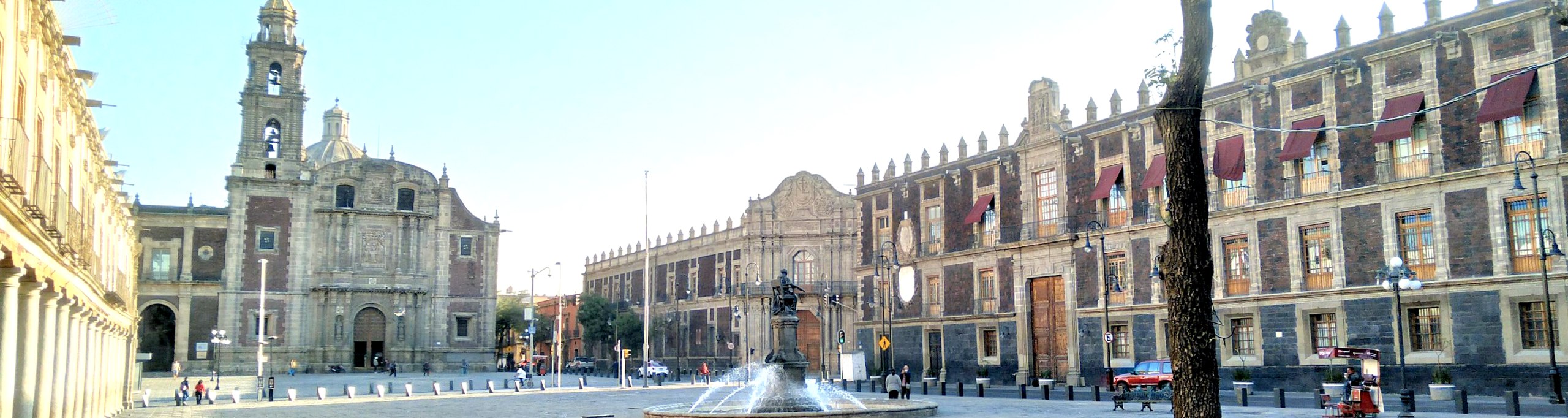
11. Plaza de Santo Domingo Plaza de Santo Domingo is one of the most evocative viceregal spaces with the greatest historical weight in the capital. Considered the second most important public center during the colonial era, it is guarded by architectural gems such as the Temple of Santo Domingo and the Old Palace of the Inquisition. Beneath its characteristic arches survives the famous Portal de los Evangelistas, where printers and scribes keep an ancient traditional trade alive. Strolling through this charming square allows the visitor to travel back in time and experience an editorial atmosphere.
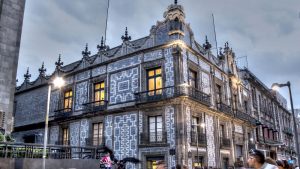
12. Casa de los Azulejos The Casa de los Azulejos is one of the most iconic and photographed civil constructions of the 18th century. Originally the residence of the Counts of the Valle de Orizaba, the building stands out for its unmistakable facade completely covered in Puebla talavera tiles. Inside, the building preserves the elegance of its golden age with quarry stone arches, sculpted columns, and the majestic mural Omniscience by José Clemente Orozco. Currently operating as a restaurant and store, it offers an environment that celebrates the sumptuous wealth of New Spanish art.
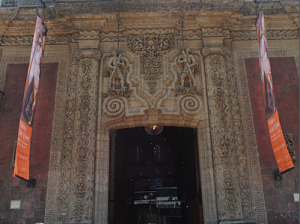
13. Palacio de Iturbide The Palacio de Iturbide is a masterpiece of baroque civil architecture, designed in the 18th century by architect Francisco Antonio de Guerrero y Torres. This aristocratic palace owes its fame to having been the residence of Agustín de Iturbide after the consummation of Independence. The structure dazzles with its elaborate tezontle and chiluca stone facade, as well as its elegant arcaded courtyards, which reflect viceregal luxury. Today it hosts important art and design exhibitions, solidifying its place as an essential cultural space.
14. Iglesia de San Hipólito The Church of San Hipólito and San Casiano is a temple of profound historical value and the center of one of the country's largest devotions. Built in 1521, its baroque architecture formed part of the first hospital complex in the Americas. Currently, it has gained international fame for being the main sanctuary dedicated to St. Jude Thaddeus. Visiting it, especially on the 28th of each month, allows you to witness a massive and colorful manifestation of urban faith, essential for understanding local religious expressions.
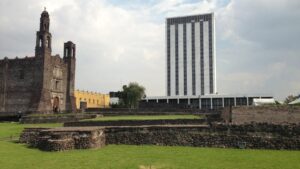
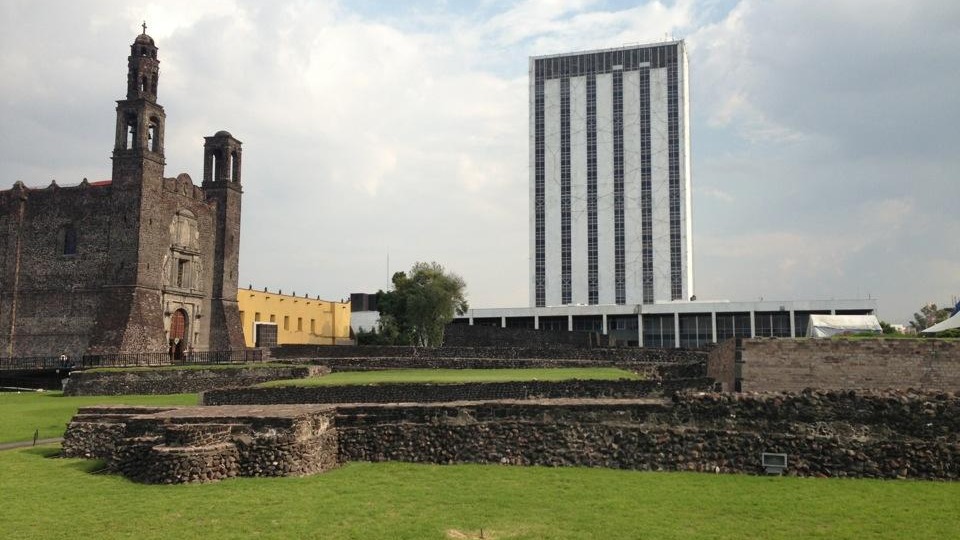
15. Tlatelolco (Plaza de las Tres Culturas) The Plaza of the Three Cultures in Tlatelolco is a monumental space where three historical eras coexist within the same perimeter. Visitors can admire the archaeological remains of the main Mexica commercial center, the imposing baroque architecture of the Temple of Santiago Apóstol, and the modernity of the 20th-century housing complexes. It is a place of profound memory, having been the scene of the last indigenous resistance and the 1968 social movements. Walking through this square is a fundamental exercise in reflecting upon the complex cultural mosaic that shapes the Mexican capital.
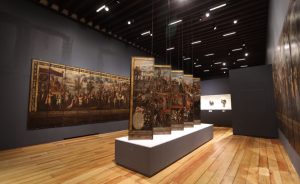
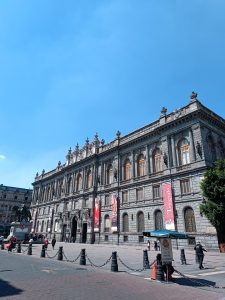
16. Museo Nacional de Arte (MUNAL) The National Museum of Art, founded on July 23, 1982, in the Historic Center of Mexico City, resides in the old Palace of Communications and Public Works, an eclectic masterpiece designed by architect Silvio Contri. Previously, the site housed the Hospital de San Andrés in the 17th century and served as the headquarters for the General National Archive before its transformation into a cultural venue. The building dazzles with its majestic marble staircase, elegant French ironwork, and sumptuous decorations. Its invaluable permanent collection spans five centuries of national art history, transitioning from the viceroyalty to the avant-garde movements of the last century. Admiring the masterpieces of landscaping and visual arts in these halls is a must-do experience.
17. Antiguo Palacio del Ayuntamiento Located opposite the Plaza de la Constitución, the Old City Hall has been the historic seat of local government since 1522. The current structure captivates with its wide arched portals, the sobriety of its tezontle stone, and its talavera tile finials. Upon entering, visitors can discover civic jewels such as the elegant Salón de Cabildos, ornamented with portraits of historical value, and its invaluable documentation center.
18. Templo de la Profesa The Temple of San Felipe Neri, historically known as La Profesa, is a splendid building that transitions between baroque and neoclassical styles. Founded by the Jesuit order at the end of the 16th century, the property holds great historical relevance for having hosted key conspiracies during the War of Independence. Its greatest treasure is its exceptional pinacotheca, which safeguards one of the continent's most important collections of viceregal sacred art, featuring works by renowned New Spanish painters.
19. Mercado de la Merced The Mercado de la Merced is the most dynamic traditional supply center in the central area. With origins dating back to viceregal trade, when products arrived via navigable canals, this complex is today a true sensory explosion. Wandering through it means delving into a universe of flavors with its wide assortment of pre-Hispanic ingredients and authentic street food from every region of the country. It is a space full of color and daily life, indispensable for those wishing to experience popular warmth.
20. Jardín de la Triple Alianza The Garden of the Triple Alliance is an intimate civic corner of great symbolic weight, located a few steps from the historic Tacuba Street. Inaugurated at the end of the 19th century, the space pays tribute to the powerful political and military coalition formed by the lordships of Tenochtitlan, Texcoco, and Tlacopan, the foundation of the Mexica empire. The central sculptural ensemble is composed of superb bronze reliefs, created by artist Jesús Contreras, portraying the Mesoamerican sovereigns. It is a solemn and monumental site, ideal for reflecting on the imposing indigenous heritage.
21. Museo de la Ciudad de México The Museum of Mexico City, housed in the Old Palace of the Counts of Santiago de Calimaya, is an indisputable jewel of baroque civil architecture. Its imposing red tezontle facade exhibits a fascinating detail: an enormous pre-Hispanic serpent head reused as a cornerstone. In addition, it preserves the intact studio of painter Joaquín Clausell; this venue functions today as the definitive narrative and visual archive of the metropolis's development.


 Plaza de la Constitución s/n, Col. Centro.
  Centro Histórico (Imperdibles)
 Public Art/Monuments