The Secretariat of Tourism of Mexico City, as part of the strategy for LGBTTTI Tourism, has carried out multiple actions and campaigns for the development, promotion, and positioning of the LGBTTI community since 2019.
The LGBTTTI community has been recognized within the logo system of the Mexico City Government. The “Turismo de Colores” logo provides visibility and presence to demonstrate work being done in favor of the dignity of all people.
“Vive con Orgullo” Campaign
Among all the actions carried out, the “Vive con Orgullo” campaign stands out for communicating with all the LGBTTTI people who live in, transit through, and/or visit Mexico City, to feel proud of who they are. The same campaign invites all tourist-oriented establishments and businesses to share the same pride through the services they provide, with warmth, respect, and empathy for all people of diverse sexualities and gender identities to enjoy every corner of the Cultural Capital of America.
One of the most relevant contributions has been the publication of a tourism guide “Capital LGBTTTI,” a bilingual editorial work to share the great diversity of activities the city offers to the national and international LGBTTTI communities.
Aware of the tremendous number of national and international tourists who visit the city on the occasion of the Pride March (celebrated on the last Saturday of June for the past 45 years), the Secretariat of Tourism of the City, hand in hand with Altearte, AC. has organized the Night of Pride since 2019. The aim is to promote respect, inclusion, and recognition of sexual diversity among the residents of Mexico City, and all those who visit. This is achieved through a series of cultural, artistic, and recreational activities. The most recent edition included a slate of more than 70 activities, under the theme of cultural tourism of the LGBTTTI community. The events welcomed a wide range of sexually diverse national and international visitors to Mexico City.
The Mexico City Ministry of Tourism also actively supports the Mix Mexico Festival: Cinema and Sexual Diversity. It is the longest-running independent film festival in Mexico City (begun in 1996). It’s also the first and largest of its kind in all of Latin America. The festival provides formal screenings to national and international films whose commercial distribution is considered “difficult” due to theme, format, style, or duration. The festival includes LGBTTTI narratives and experimental films about gender, living with HIV, discrimination, and sexual politics, and the festival includes conversation and creative exchange between professionals and their audience.
Among the achievements and recognitions received by Mexico City has support of LGBTTTI Tourism was the “Best Urban Destination 2022 and 2023” awarded by the National Union of LGBT+ Tourism Entrepreneurs, A.C.. This recognition recognizes the City’s commitment to remaining at the forefront of its inclusive vocation. It’s expressed through specialized tourism services that provide quality, welcome, and safety to lesbian, gay, bisexual, transgender, transvestite, transsexual, and intersex tourists who travel through, visit and enjoy Mexico City: the Heart of Diversity.
Mexico City became the first Latin American national capital city to receive the distinction of Queer Destinations Committed. The distinction recognizes a specialized tourism offer for the LGBT+ community. The recognition was achieved based on the “Hospitality Meets Diversity” Seminar on LGBT+ awareness and training. Participants included strategic actors within the travels sector, at touristic areas of the City’s 16 alcaldías and public servants of the Ministry of Tourism of Mexico City. This was in addition to actions undertaken by the Mexico City Government in favor of the community.
The value chain is important for the commitment of the government of Mexico City, because it allows the tourism industry to strengthen strategies of attention to LGBTTTI tourism. Below are the Mexico City establishments which received the Queer Destinations Committed distinction.
Hotels and Hospitality:
Transportation:
Agencies:
Click on any of the map markers above for details on Mexico City lodging discounts.
Local hoteliers have banded together to offer special lodging discounts for travelers arriving to Mexico City via the Felipe Ángeles International Airport. The Aeropuerto Internacional ‘Felipe Ángeles’ offers one more way to stay for a lot less in Mexico City. The airports increasing flights now leave travelers with an extra incentive.
Hotel discounts mean you can stay an extra night, or plan an entire new trip. Most of the participating hotels (click on the map above) just ask for a boarding pass, or ticketing info. If you’re flying through AIFA, they’ll mark your hotel fare down. That’s enough for some travelers in Mexico City for the Holidays, or for the added excitement of a New Year in Mexico City.
Additionally, “Plus One Night” discounts are good through the end of the year and offer all kinds of discounts on local tours, meals, and theater. There’s more info here.
If you’re flight is arriving via the Felipe Ángeles Airport, now you’ve got extra incentive to stay a bit longer, or to book with a participating hotel.
If you’re just planning you’re trip, book your flight through AIFA, and you’ll save that much more.
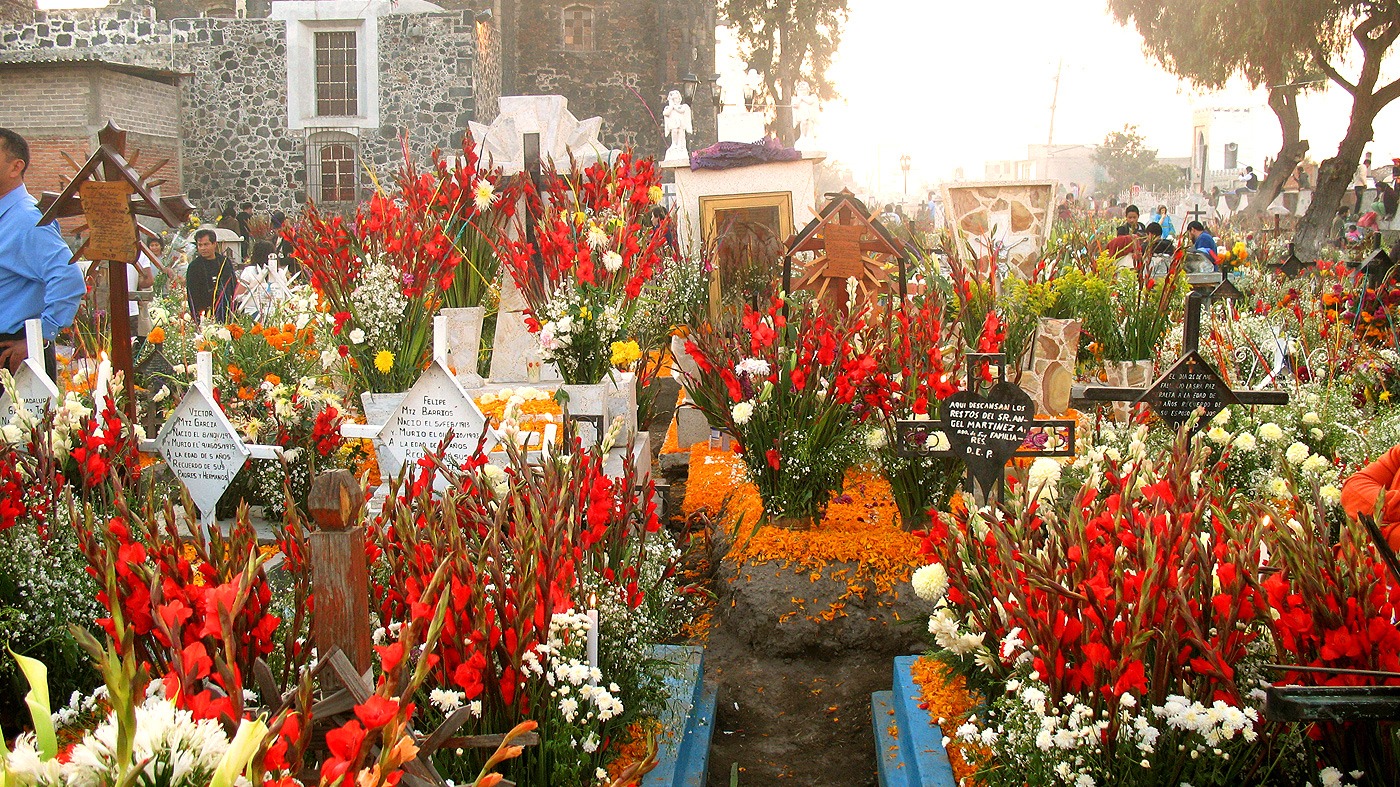
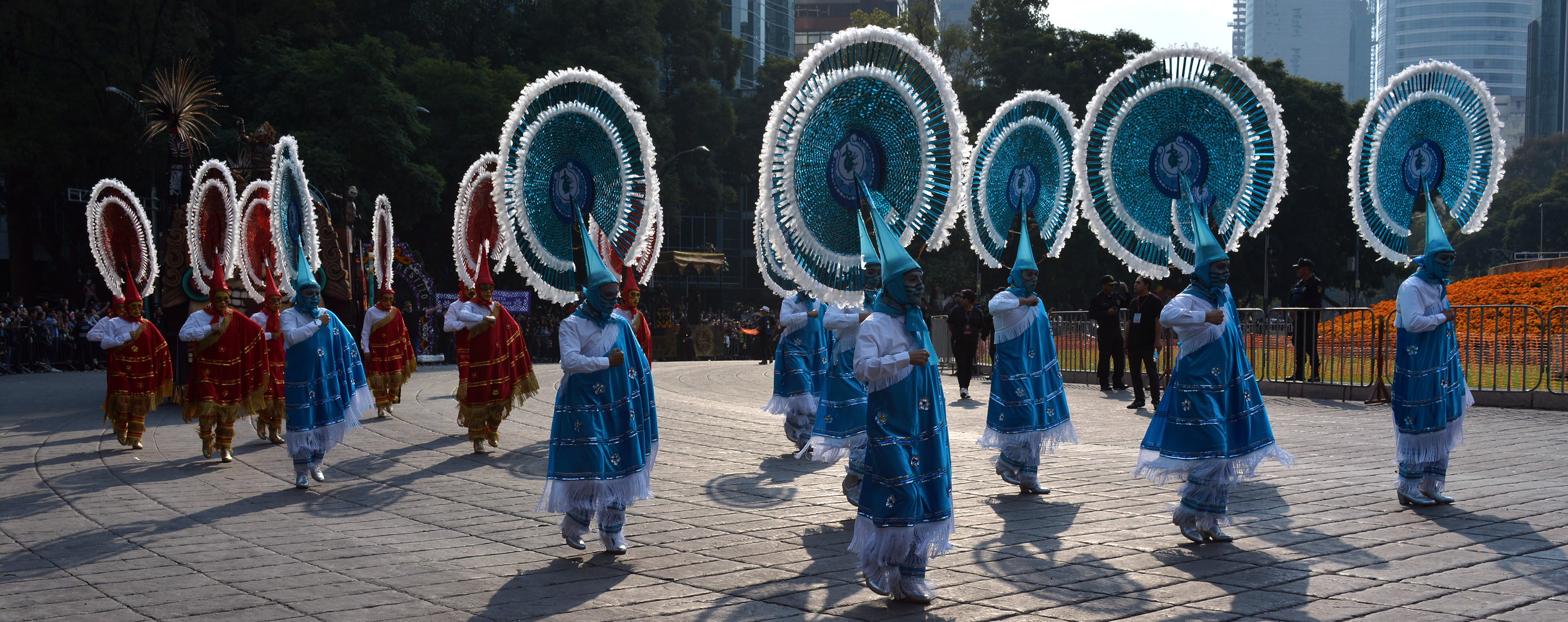
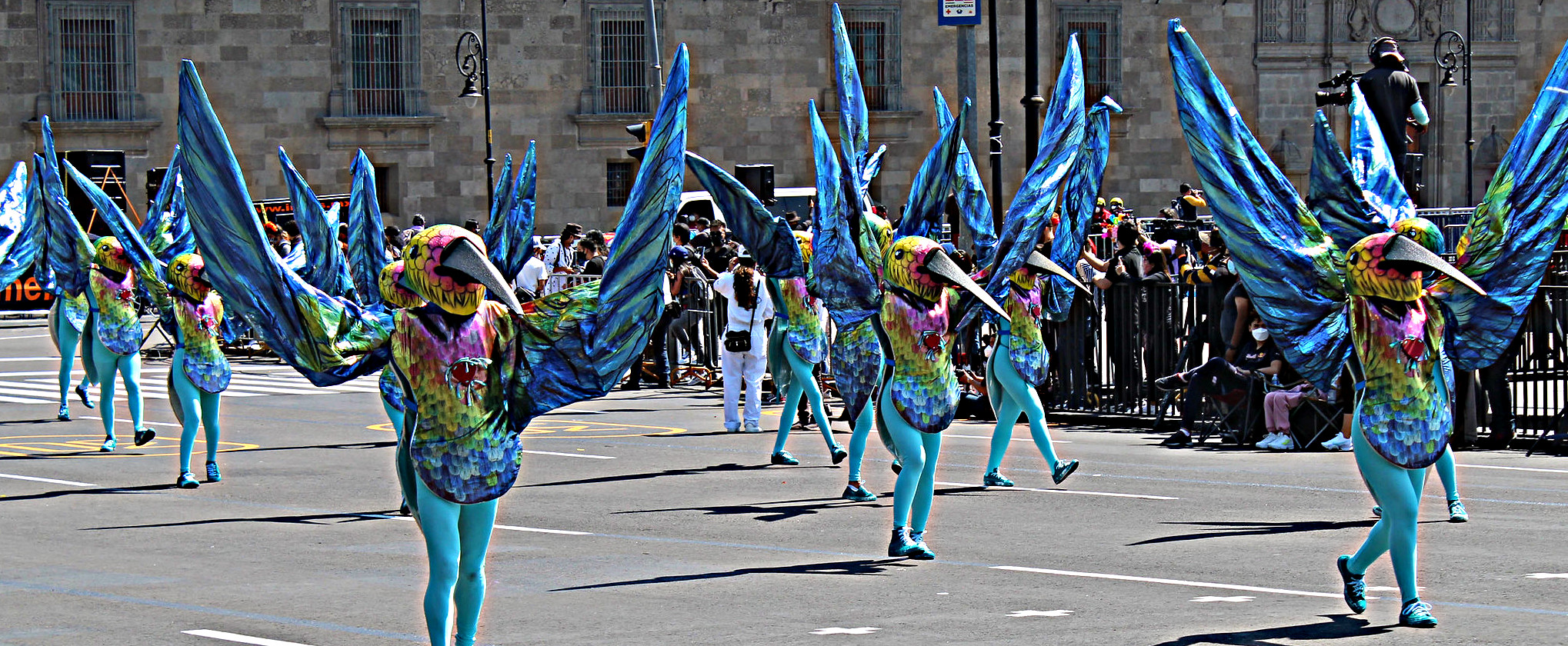
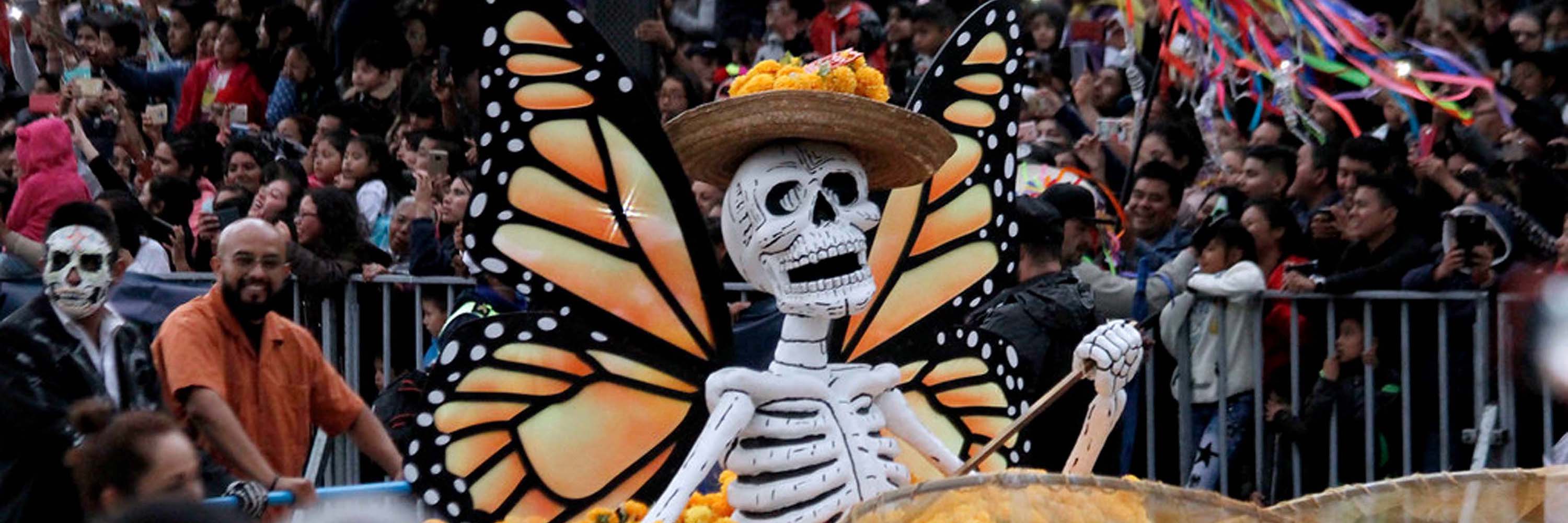
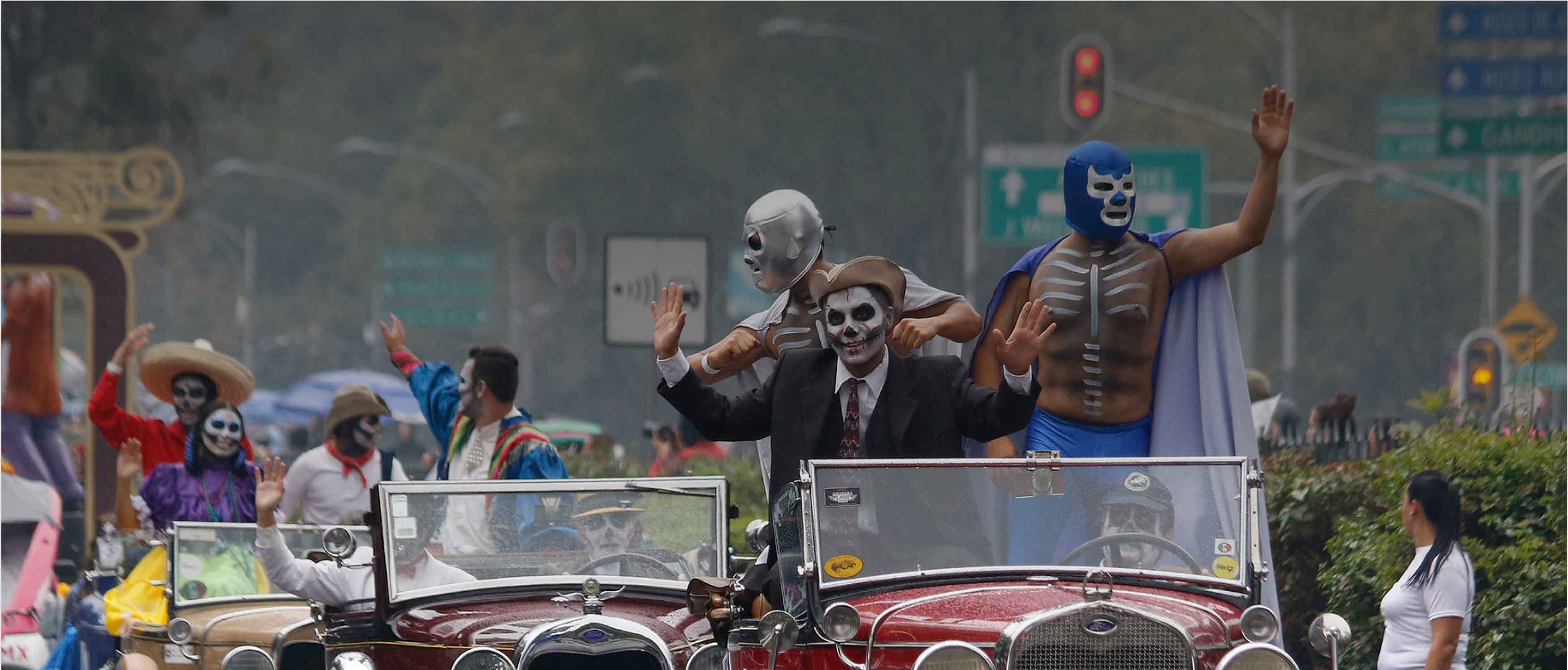
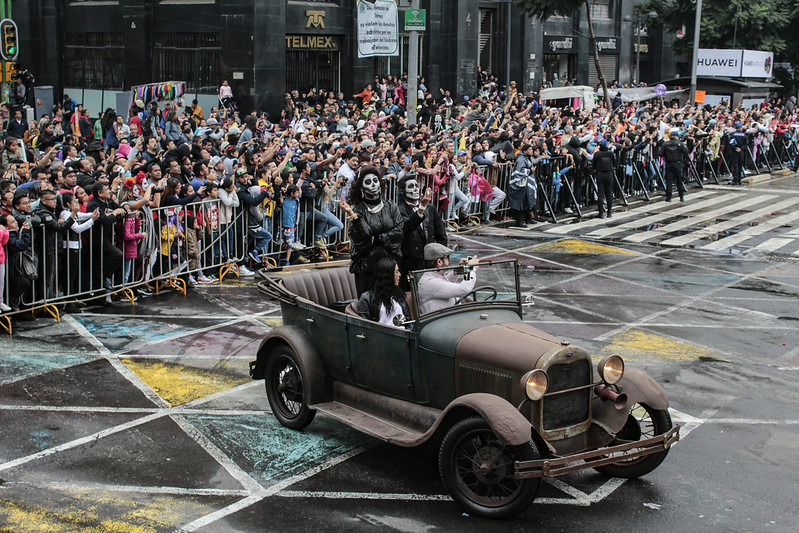
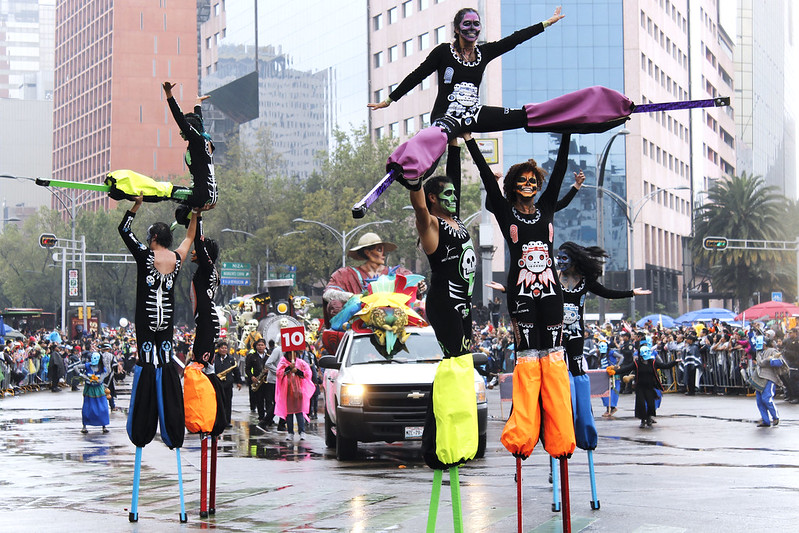
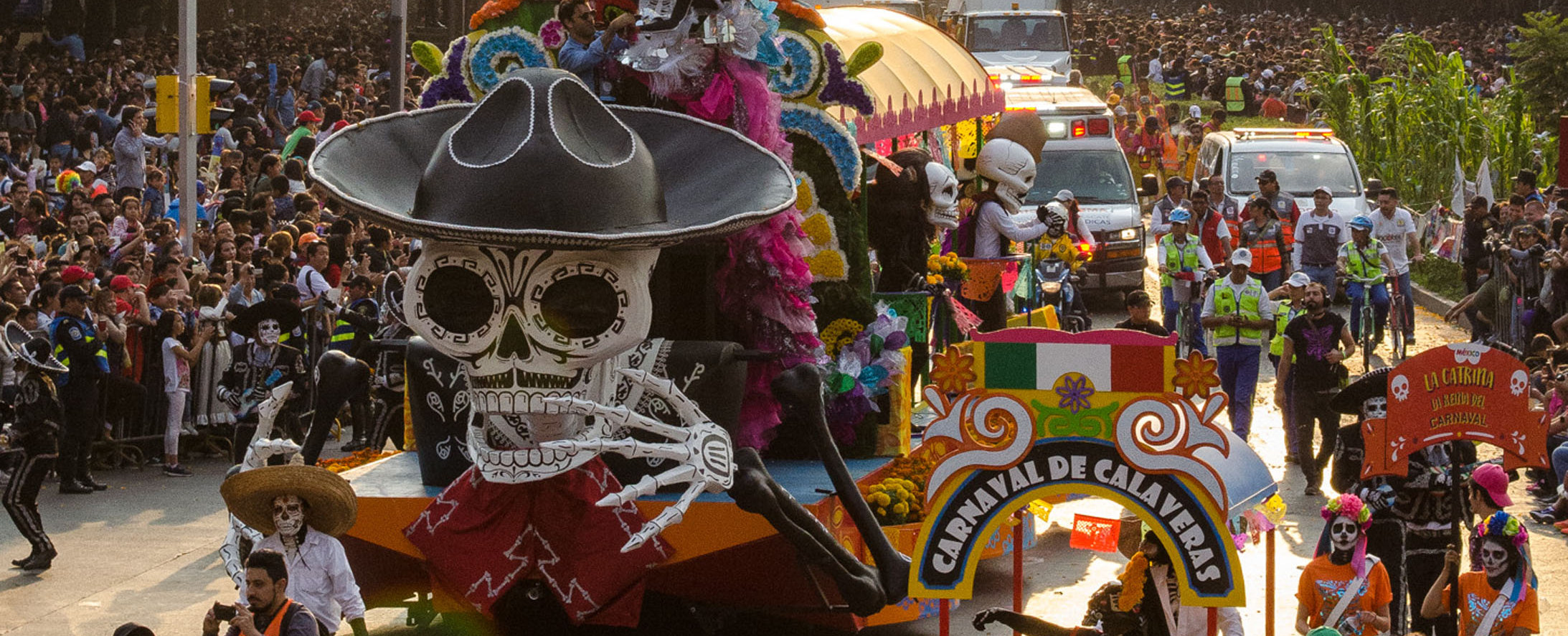
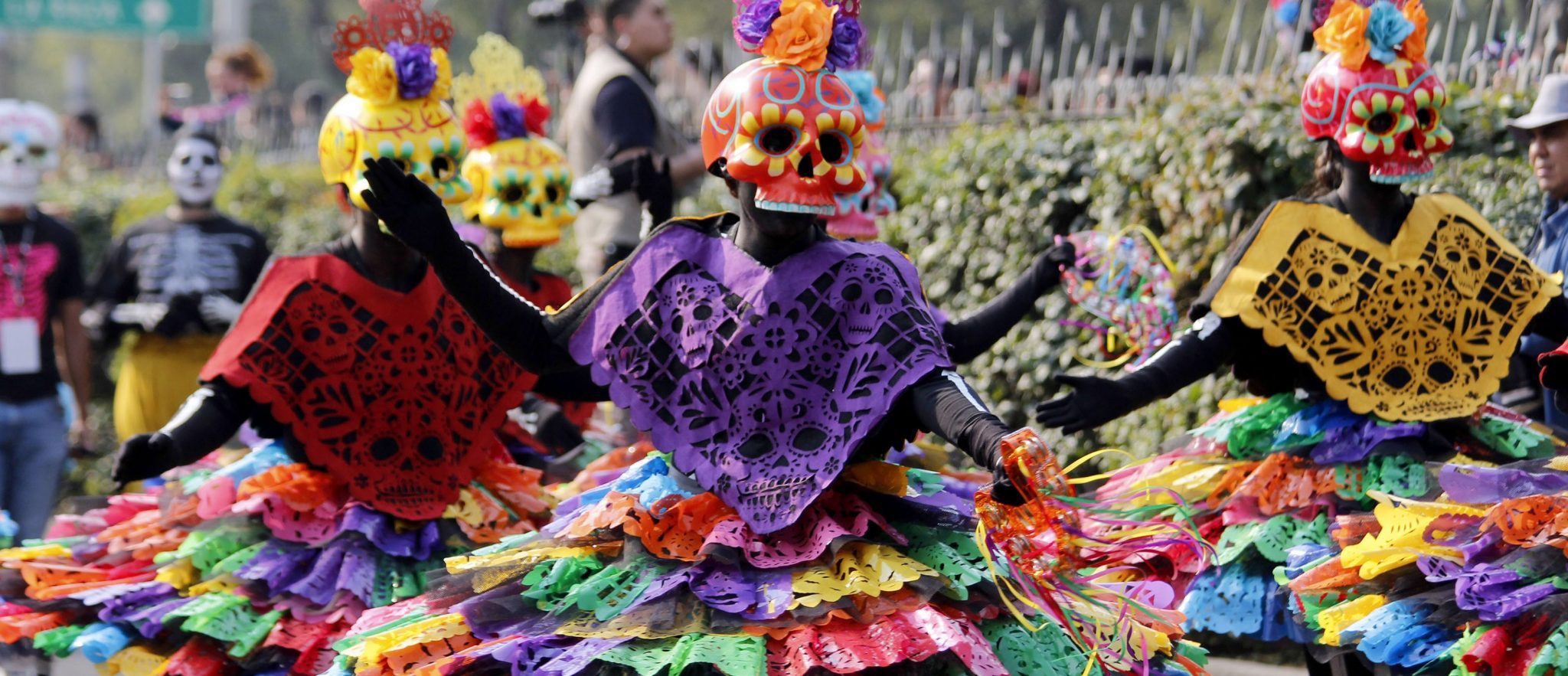
Day of the Dead celebrations in Mexico City will occupy most of October and the first two weeks of November.
The transitory return of the souls of the departed, believed to be returning home to spend time with their families, is greeted with parades, altars and events of all kinds.
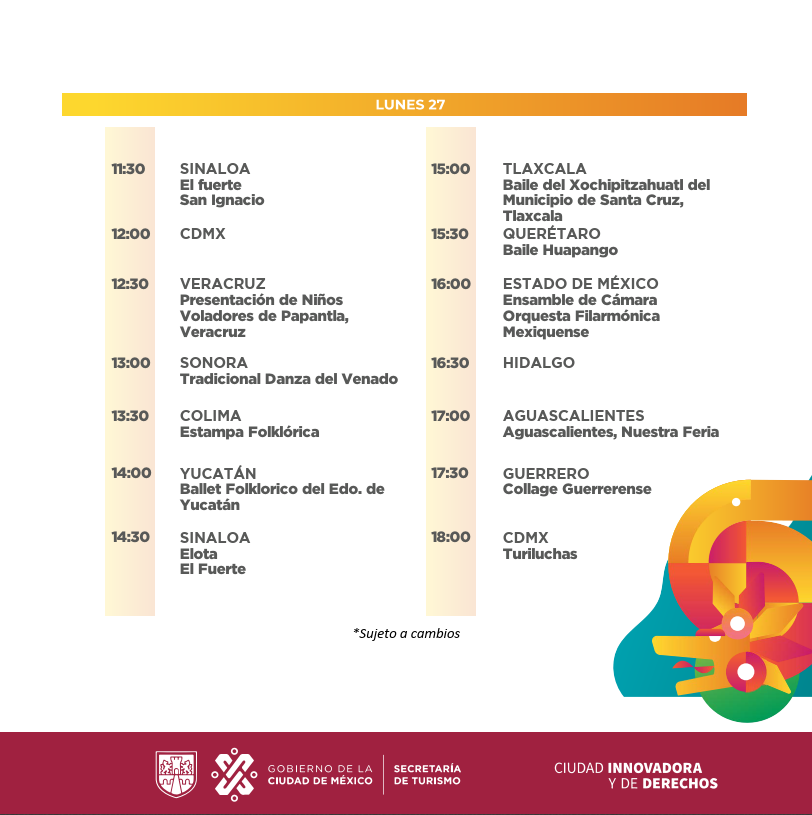
All dates and times are subject to change.
~ This page is updated as event schedules are updated. ~
————
Traditionally, this lakefront opera is one of the first to address the seasonal theme. Special night tours of the canals are launched from the Cuemanco docks in Xochimilco. Costs of between $500 and $600 pesos per person are combined with packages that include one of the city’s most haunting and fascinating performances.
Scream Park returns to the Monumento a la Madre, with a variety of activities: mazes, haunted houses with the central theme, this year of Witchcraft. The park is open from 6 pm to 1 am on Fridays and Saturdays, Sundays and Mondays from 6 pm to 12 am (midnight). The cost is $500 per person and $250 for students.
Day of the Dead festivities at the New Axolotl Museum at Parque de las Aguilas include theatrical performances, live music, costume contest, vendor bazaar, food, dancing and more. The two-night event runs from 5 p.m. to midnight. Admission is $150 for adults and $100 for children.
The emblematic walkway of the important and beautiful Reforma Avenue is adorned with hundreds of cempasúchil flowers, one of the most representative symbols of the Day of the Dead celebration. It is with this flower that the monuments and enclosures along Reforma Avenue are also framed.
If you are a lover of the witches’ season you can’t miss this musical and multisensory experience with songs like Amor Eterno (Eternal Love) by the light of thousands of candles. It is at Teatro Cantoral, Puente Xoco s/n-Puerta A. Xoco.
Once a year the doors of Mictlán are opened to welcome the living and the dead. Diners are taken on a journey to the underworld where they will learn about different eras of Mexican gastronomy. Bring a photo of the person to whom you are dedicating the dinner.
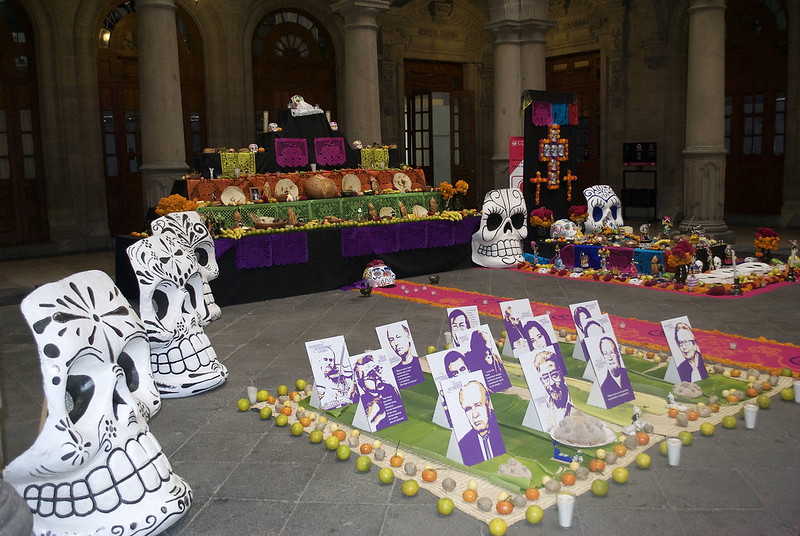
Monumental altars will be set up in the Plaza de la Constitución, there will also be samples of the multitude of traditions and customs through which the Day of the Faithful Departed is celebrated in the country. There is no shortage of marvelous cempasúchil flowers placed along Paseo de la Reforma.
On Paseo de la Reforma between the Angel de la Independencia and the Glorieta del Ahuehuete, the Looney Tunes night race will take place at 8:00 p.m. in two categories: General: 15 to 99 years old and athletes with disabilities and/or INAPAM credentials. The cost varies from $400 per person to $699. Register until October 27 online through the Emoción deportiva website or at Deportes Martí stores.
Also on Saturday 28 there will be an opportunity for bike ride lovers. The tour will start at the Fuente de Petróleos and culminate at Plaza Tlaxcoaque. In addition to the delights of the transfer there will be other activities like last year’s where you could enjoy contests, live music and other surprises. This activity is free of charge.
Visit the cemeteries of different municipalities and share the experience of the people who wait there for their deceased by placing offerings to worship their dead. Unforgettable scenes of colorful and festive devotion illuminated with hundreds of candles and bouquets of cempasúchil, the flower of the dead. Cemeteries with more tradition:
How fun! Can you imagine walking several floors of the Torre Latinoamericana in the dark of night while listening to scary stories of the dead? As a truly high altitude event, for two days you will be able to tour several floors of the iconic Torre Latinoamericana while learning various spooky legends. The event will start at 7:30 pm with a cost of $300.
A nighttime run from the Bosque de Chapultepec at 7:30 pm. The event departs from the Centro Cultural de los Pinos and opening festivities include music, makeup and costumes. For more information click here.
One of the most spectacular Day of the Dead altars at Gate B of the University Olympic Stadium. The 26th annual event is dedicated this year to “Women in the Sciences, Humanities and Arts.” The altar itself is surrounded by related exhibits, tours and events.
At the Plaza de Toros Mexico in the central neighborhoods of Colonias Napoles and Noche Buena, the famous movie Coco will be screened at 7 p.m. and many famous artists such as Pedro Fernandez, Eugenia Leon and Omar Chaparro will participate accompanied by a live orchestra. The cost is from $600 to $1,250 per person.
The most spectacular parade of all, it is totally free and includes performances by artistic and cultural collectives from all over the country. The event is totally free and lasts about four hours.Here you can find the route of the Day of the Dead Parade 2023.
The seventh edition of the event where mezcal and you are the guests of honor will take place at the Club de Leones CDMX at Calle de Ures 13 Col. Roma Sur. Here, artisanal producers, mezcal masters and women mezcal producers are given a voice and a vote in unforgettable tastings. November 4 and 5 from 1:00 pm to 9:00 pm at a cost of $50 per person.
Arrive in Mexico City for a new adventure through the city as they discover exciting stories, make new friends and capture the Pokémon that await them. Themed wild Pokémon characters are throughout the city. Complete special investigations exclusive to City Safari and explore the rich culture of Mexico City and surrounding areas.
Times: November 4 from 10:00 to 18:00 / November 5 from 9:00 to 14:00 and 17:00 to 20:00
The Pan de Muerto y Chocolate Festival, a favorite of visitors to the Centro Histórico, takes place November 3-5 at the Palacio de la Autonomía de la UNAM, next to the Zócalo . The cost is only $20 pesos per person.
Enjoy at Six Flags Mexico the Horror Festival 2023 that has become a tradition for the last 11 years. The amusement park event will feature eight attractions for its visitors, three of them completely new.
Special tours for Day of the Dead to which an exclusive room will be dedicated. There is also an interactive ofrenda, a room dedicated to catrinas and a space dedicated to engravings and skulls. Monday to Thursday from 10:00 to 18:00 hrs, Fridays and Saturdays from 10:00 to 20:00 hrs, Sundays from 11:00 to 18:00 hrs.Cost $99 and $129 fines per week.
Metropolitan Palace: C. de Tacuba 15.
Check the map above for all kinds of offers and specials. They’re across Mexico City.
Mexico City’s Secretary of Tourism announced a series of efforts to convince guests already in the Mexican capital to add another night to the stay.
There’s plenty of reason to do add another night to your stay.
Need still more convincing? There’s wall to wall specials on hotels and accommodations, too.
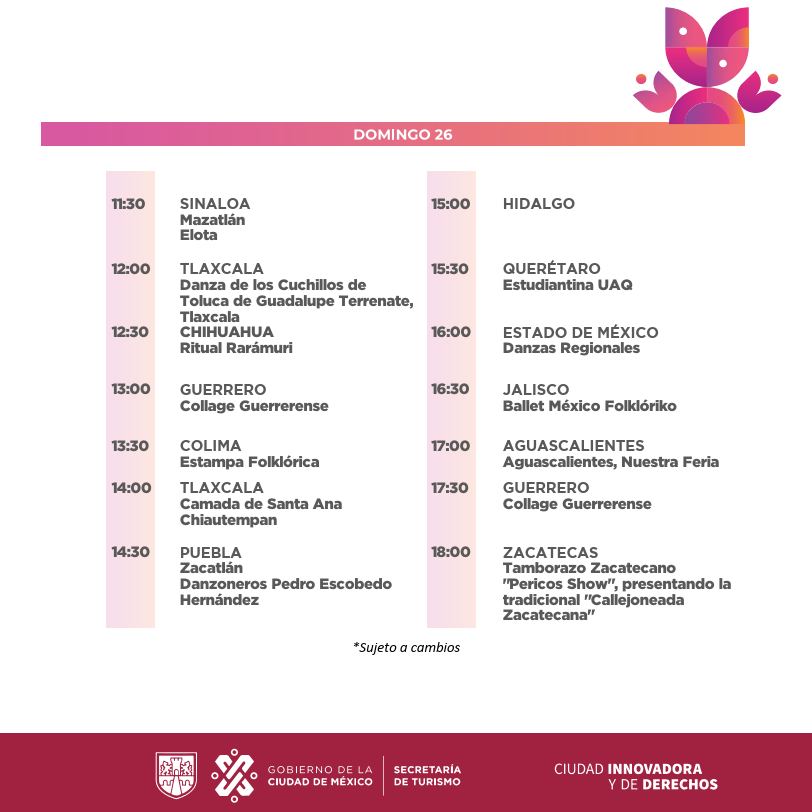
Always colorful, the sidewalks of Paseo de la Reforma are welcoming the enormous Tianguis Turístico in March of 2023. This includes two complete complete exhibitions, both featuring the wealth, cultural, and natural offerings of the 32 different states of Mexico. While the Tianguis itself occupies the giant Centro Citibanamex on the City’s west side, some of the festivities reach right into the heart of the capital.
Between the Diana the Huntress Glorieta and that of the Angel de la Independencia, the Festival Turístico includes information booths and presentations from all 32 Mexican States. These are spaced so that visitors can take in something from all 32 destinations. Many of them are spell-binding.
The festival continues with cultural presentations, music, and dance from all over the Mexican Republic. These take place on the Calzada Juventud Heroíca. That’s the broad walkway between the Puerta de Los Leones on Reforma and the Niños Heroes Monument within the park.
Included are troupes and cultural groups from every state. It’s a great way to experience the culture and history of the entire country including lots of little-known lore and tradition that you won’t catch anywhere else. Performers were selected, in their home states and cities, specifically for this festival.

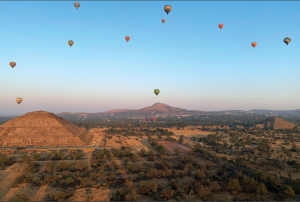
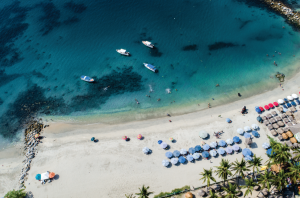
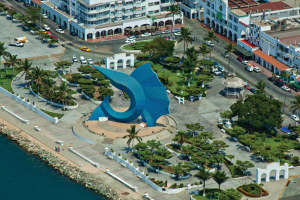
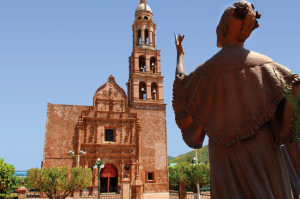
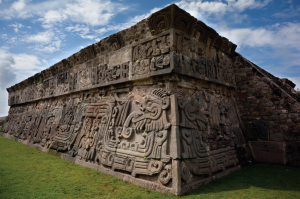
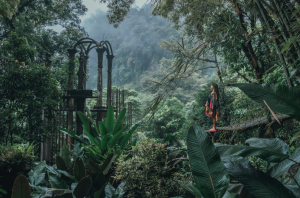
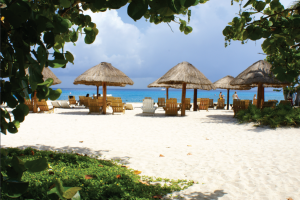
Individual photo descriptions and credits are available at the exhibition, outside Reforma 222 on Paseo de la Reforma through March 31.
Outside Reforma 222, no fewer than 32 individual stands present one of big group of photos. These will give viewers a strong overview of just how much there is in Mexico to visit. It’s a lot. Hours for this section are daily from 9 a.m. to 7 p.m. The photos at the top of this page were all selected from those on view.
The exhibition will remain on view from Friday March 17 through March 31, 2023. “The Riches of Mexico” is intended to highlight the individual attractions that all 32 states of Mexico offer. To no one’s surprise, each is unique in its natural, cultural, and touristic offering. It depends simply on the interests and desires of the individual visitor.
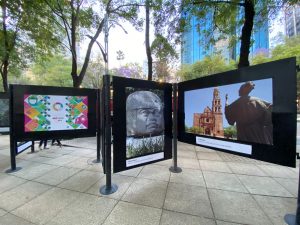
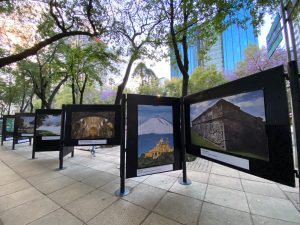
Both events are free and open to the public. If you’re in the area, exploring Chapultepec, or the Zona Rosa or Colonia Cuauhtemoc, it’s easy to take in the festival or the photographic exhibit at the same time. Free public events like these are part of what makes exploring central Paseo de la Reforma such an experience.
ONE WEEK MEXICO CITY ITINERARY
With a week in Mexico City, you can take your time, amble through different neighborhoods, and not stress about the traffic. Since you have a solid 7 days, I recommend spending each day in only one or two neighborhoods. This will allow you to explore them deeper, spending more time in one place, and also will allow you to avoid peak traffic.
If you are visiting Mexico City for the first time, you may want to consider hiring a guide for that first or second day of your trip. It will give you a much better understanding of the history and culture for the rest of your travels around the city and it will likely be able to give you a better idea of what you want to see for the remainder of your time in Mexico City.
I highly recommend Journeys Beyond the Surface. They offer private tours with exceptional guides who are experts on Mexican history, architecture, art, and culture and every tour I’ve taken with them has taught me something new about this amazing city.
You can also contact them to help with trip planning. For $35, they will help you with everything from maps and advice to help with any issues you may have with booking events or other tours. Their trip planning offer lasts from the moment you start with them until the moment you leave Mexico City so you always have a friend at hand to answer any questions you might have.
DAY TWO: CONDESA & ROMA
These two neighborhoods, which sit side by side, are some of the most livable places in the city. It’s where Luke and I always end up on weekends for their cute cafes, reasonably priced restaurants, and all the craft beer. There are some really great markets in this area as well.
One of the best things to do in these neighborhoods is to simply wander. Start at Parque Mexico and head around Avenida Amsterdam (the ring road that circles Condesa). This is where you should have lunch and a coffee (or beer). I love coffee from Frëims and Blend Station for coffee and breakfast at La Esquina de Chilaquil is must! It’s a little street stall with a HUGE line, but it’s truly worth the wait for what many call the best torta in Mexico City.
Be sure to veer off onto the side streets to enjoy the colonial architecture and street art. This is where some of the best are hidden. If you’re feeling peckish, head to El Moro for some delicious churros and hot chocolate.
If you keep heading east from Amsterdam, you’ll cross into Colonia Roma. The main street here is Álvaro Obregon. The street is lined with some of my favorite bars and restaurants.
Great cafes in Roma to try are Delirio and Dosis. Try the pastor tacos at Tacos Alvaro Obregon (this is my favorite spot to eat them!) or have chicharron tacos at Tacos Orinoco. El Palenquito is a good spot to sample different types of mezcal and Limantour is THE place to go for cocktails – it’s currently ranked the #1 bar in Latin America and #13 in the world!
To experience a local Mexican market, head down Medellín or Monterrey Streets until you reach Mercado Medellín. You can get fresh fruit, flowers, homemade furniture, and more great antojitos. Don’t forget to try some Horchata, a drink made with either rice or oatmeal and topped with a hefty scoop of cinnamon. It is super delicious on a hot day.
For a fantastic tianguis (local weekly market) that has some of the best food in all of Mexico City, head to the roundabout called Fuente de Cibeles. It is here on Wednesdays, Saturdays, and Sundays and you’ll see the entrance to Bazar el Oro. My favorite spots here are the mixiote tacos at Taco Mio and the falafel stand make amazing wraps (it’s the only Lebanese place in the market, you can’t miss it).
Read: What to Do in Condesa
mercado roma mexico city
Another market to check out in the area is Mercado Roma. Completely different to Medellín, Roma Market is modern and chic. Sit at one of the long wooden benches and take your pick. Sushi burritos sit next to ceviche taco stands. There are mezcal bars and Mexican craft beer shops. It’s a plethora of gastronomical delights and you could accidentally spend the majority of your day here.
Roma is also a great place to explore the local art scene. It’s packed with galleries like Galería OMR, TOCA Galeria, and the colorful Fifty 24MX Gallery.
If you’re ever stumped for a place to eat, both day or night, simply head into these neighborhoods and you won’t be disappointed. Try some of the street vendors, you won’t be disappointed. After dark, most cluster around Avenida de los Insurgentes.
Read: Everything You Need to Know About Street Food in Mexico City
DAY ONE: HISTORICAL CENTER
The center of the city referred to as the Centro Historico is packed with history. It’s said to have been built on the exact site of the Aztec capital, Tenochtitlán. This is where you’ll find the historical buildings, the museums, and the artifacts that make Mexico City into the metropolis that it is now.
Start the day in the Zócalo, the center of the city, in front of the Mexico City Metropolitan Cathedral. The cathedral was first built in 1573. It is the largest cathedral in the Americas and one worth spending a little time exploring, regardless of your religious affiliations. The square is also where they filmed the start of Spectre (the 007 film). Luke always likes to point that out to our visitors!
Your next stop should be Palacio Nacional, the National Palace. This is where the original Aztec ruler Moctezuma, had his palace. The inner walls are covered with murals by Diego Rivera, one of Mexico’s most famous painters. The murals depict the history of Mexico City as far back as before the arrival of the Spanish. It’s really beautiful both inside and out. Be sure you have an ID with you (if you don’t have a Mexican-issued ID, then it will need to be a passport, but only one person in the group needs it).
If you want some more Spectre themed sightseeing, head across the Zocalo to the Gran Hotel Ciudad de Mexico. Even if you’re not a huge film buff, the art deco interior is worth a peek. The ceiling is stained glass and stunning. You can also go upstairs to the terrace restaurant for views of the zocalo and a nice cold beer.
For a nearby breakfast spot, check out El Cardinal. It’s well known for its hot chocolate and freshly baked bread like conches. They also make some pretty spectacular chilaquiles – a popular Mexican breakfast food that will keep you full all day long. For less pomp and ceremony, but equally delicious breakfast, check out either Cafe El Popular or Cafe La Blanca.
For more amazing murals, I also recommend checking out the Secretary of Education building (some of my favorite murals in all of Mexico are here) as well as the Colegio de San Ildefonso, which is where you’ll find the very first mural that Diego Rivera painted in Mexico. It’s also where he first met Frida. The Secretary of Education building is free to enter, you just need to tell them that you want to see the murals. The Colegio de San Ildefonso allows you to see the Diego Rivera mural for free, but if you want to see the other murals, you have to pay a small entry fee.
Read: A Sunday Walk Along Paseo de la Reforma
Visiting Teotihuacan
[Advertisement] Your video will begin shortly: 0:04
REPORT THIS AD
As you head away from the Zocalo, head over to Palacio de Bellas Artes, the Palace of Fine Arts. It’s the city’s opera house and fine art museum. It’s also my favorite building in the entire city. Check out that colorful dome against the blue sky – SO picturesque!
Have a read of the signs to see if there are any shows on. The Folkloric Ballet of Mexico is well worth it if you enjoy live music and want to see some classic Mexican dancing. The costumes are spectacular and the music is really something special. You can usually get a ticket for about 300 pesos ($15). The shows are every Wednesday and Sunday – simply pop into the lobby of the Palace of Fine Arts and head to the ticket counter to get one (they don’t speak much English, but will write down the times and point at seats if your Spanish language skills are lacking).
If you want a quick coffee, head into the Sears building across the street from the Bellas Artes and go up to the top floor. There is a cafe there with a great view out over the area and the coffees are pretty good as well.
Alternatively, you can go to the top Torre Latinoamericana. My most recent visit in June 2019 cost me 120 Pesos (roughly $6 USD). They give you a map with your ticket so you can see what buildings you’re looking at and the views are 360, making it one of the best places to see the city from above (in my opinion). I actually think going up this building on your first or second day in Mexico City is a great way to really understand how truly massive this city is and to start to see some of the different places that you’re going to check out during the rest of your week in Mexico City.
For lunch, I recommend stopping at the market near Hidalgo Metro Station (to the right of the Barrio Alameda building if you’re looking at it). You’ll see tons of red tarps and different vendors selling pambazos, tacos, gorditas, and quesadillas. Pick a busy spot, grab a stool and order a few different things. They’re super cheap and incredibly delicious. If you would prefer a restaurant, nearby is also a fantastic place called Taqueria Tlaquepaque. They have all of the best Mexican classics like pastor tacos, tortas, carnitas, and delicious agua frescas.
If street food isn’t your thing, a great local restaurant to try in the Historic Centro is Cafe de Tacuba. On weekends you may have to wait a few minutes for a table, but for most of the week you’ll get straight in to enjoy great Mexican classic dishes like mole, chile rellenos, and chilaquiles. There’s always live music and the interior is something to behold. They’ve been cooking up dishes in Mexico City at this very location for over 100 years!
Other worthwhile midday food spots in the Historic Center are El Flaco for “basket tacos,” El Huequito for alambre and pastor tacos, and El Pescadito for fish tacos – be sure to try the marlin!
DAY THREE: COYOACAN
Coyoacan is by far my favorite neighborhood in Mexico City and one that cannot be missed. It has amazing street food, my favorite cafes, beautiful museums, and really hip craft beer and mezcal bars.
Things not to miss: The Frida Kahlo Museum, Leon Trotsky Museum (particularly interesting if you want to learn more about Mexican history as well as more about Frida and Diego), Mercado Artesenal Mexicano, tostadas at Mercado Coyoacan and fried quesadillas at Mercado de Antojitos.
It feels a world away from central Mexico City. The streets are cobbled, lined with trees, and full of historic churches and homes.
Read: What to Do in Coyoacan
what to do in coyoacan mexico city
If you’re interested in learning more about the legendary Frida Kahlo (you will be after seeing her all over the city), start your day at La Casa Azul, the blue house. This is where Frida Kahlo was born and raised (and even died!) and is now a museum commemorating her life.
You can see things that used to belong to her – jewelry, clothing, artwork. There is also a collection of pre-hispanic art on display. Book your tickets online before you arrive so that you can skip the line.
A few blocks from La Casa Azul is the central square, Plaza Hidalgo. This is a really nice park to just relax and people-watch in. Restaurants and bars line the square and all offer plenty of outdoor seating.
Beside the square is arguably the best market in the city (it’s one of my favorites for sure!). It’s called Mercado Artesanal Mexicano, and it has so many Mexican souvenirs and crafts inside. It’s two floors and is packed with bright colors, strong smells and, on weekends, tons of people. I don’t think I’ve ever gone there without buying something.
San Juan Bautista is also a great place to check out. A former convent, this church was built on top of an old school for the children of the Aztec nobles. It’s over 300 years old, making it one of the oldest Catholic churches in all of Mexico! Be aware that there are tons of hawkers trying to sell things outside the church. I’ve heard, on the odd occasion, of pickpocketing happening in the square.
Have coffee at Café Avellaneda, a beer at Centenario 107, and tostadas in the Coyoacan Market (look for the bright yellow tablecloths).
How to Get to Coyoacan:
To get to Coyoacan from the city center, you can take the metro line 3 to Coyoacán, Viveros, or Miguel Ángel de Quevedo stations. None are particularly central to Coyoacan, so if you don’t mind spending $2-$3, I recommend simply taking a taxi or an Uber (ubers are generally cheaper and safer than city taxis in my experience).
DAY FOUR: TEOTIHUACAN RUINS
I just wrote about taking a tour of Teotihuacan a few weeks ago. It was such a great experience and the pyramids are incredible.
I really recommend taking a tour if you’re only going to be in the city for a few days. They’ll pick you up from your hotel and drop you back off there at the end of the day. They’ll organize a place to have a nice Mexican lunch and ply you with tons of tequila, too! Journey’s Beyond the Surface is the company that I recommend most.
However, it’s also incredibly easy to do on your own. You can either take the bus or hop in an Uber. If there are going to be a larger group of you, you can also hire a driver for the day from the Zocalo (near the big pink bus stop to the left of the Cathedral) or to the right of the Hilton Reforma.
READ: TOURING TEOTIHUACAN – A MEXICO CITY DAY TRIP
If you do want to go it alone, you can catch a bus from the Northern Bus Terminal, Terminal Autobuses del Norte. Buses labeled Piramides leave every 20 minutes for Teotihuacan and drop you off at the bus terminal there, a five-minute walk to the entrance of the ruins. It takes about an hour to get there and you can easily catch a bus back from any of the entrances to the park.
Have more time? Maybe you want to check out a professional futbol game! Even if you’re not a big fan of soccer, you’ll likely love the atmosphere of these sporting events. There is usually at least one game per week in Mexico City since there are three teams.
DAY FIVE: POLANCO
If you’re in Mexico City for a week and you want to explore some of the finer things in Mexico City, you can’t miss a trip to Polanco. Polanco is the upscale neighborhood in Mexico City. It’s home to the ultra-wealthy, the top hotels and restaurants, tons of museums, and all the designer shopping.
Walk down Campos Eliseos. It’s a really beautiful tree-lined street with some of the biggest and fanciest houses in the city. Then head to Parque Lincoln, the unofficial center of the suburb. It has nice walking paths and is a good place to start your stroll around the neighborhood. You’ll hear French, German, and plenty of English in this neighborhood. It’s where a lot of expats live. It’s around this park that you’ll find most of the best midday lunch spots and cafes. One of my favorites is Surtidora Don Batiz. The ceviche here is delicious!
If you want to see the center of all the luxury, walk down Avenida Presidente Masaryk. All the streets that branch off have nice restaurants, cafes and bars worth stopping into.
Polanco is home to several really wonderful museums and art galleries. The largest and most frequented is the Museum of Anthropology. This is where you should head if you want to see Aztec and Maya ruins and if you want to learn more about the not-so-famous Mesoamerican cultures of Mexico. It’s enormous and if you really want to explore it all, you could easily spend several hours here, so be sure to have a big breakfast before you arrive.
If you’re interested in art, you’ll find some of the best galleries and museums in Polanco. Jumex Collection is the city’s most valuable contemporary art collection. Every month or two big-name exhibitions come through. A few months ago I saw a fantastic Andy Warhol exhibit here and the best part is it’s usually totally free!
Next door to Jumex Collection is the Museo Soumaya. It was commissioned by one of the richest men in Mexico (and indeed the world), Carlos Slim. The building is really unique and worth a visit even if you don’t go in. It is worth going in though and it’s free every day of the week. On the inside, you’ll find European paintings, pre-hispanic sculptures and ceramics, and ivory from around Asia.
If you want to splurge, make a reservation at Pujol for dinner. It’s ranked as one of the top five restaurants in the world. For $80 per person, you’ll get a seven-course degustation. The mole is truly something to behold, but I also love Quintonil, a nearby restaurant with perhaps not the same high reputation, but simply stunning food.
The best street food in mexico city
DAY SIX: XOCHIMILCO
Xochimilco is an area a few miles south of the city center. It’s best to take a taxi here or speak to your hotel – many hotels offer mini-buses here. You can also do tours here if you’d rather have them organize the whole thing. Olympus Tours have a reasonably priced tour here which I recommend if you don’t speak any Spanish.
The three main things to explore in Xochimilco are the Museo Dolores Olmed Patiño, the market, and the main attraction: the floating garden.
Read: Xochimilco: The Complete Guide
The Museo Dolores Olmed Patiño was once the house of socialism Dolores Olmedo. In 1994 she opened her home to the public to show off her art collection. The grounds are one of the best things about it. There are peacocks wandering around the well manicured lawn. Inside you’ll find several pieces by Diego Rivera, and entire room devoted to Frida Kahlo, and several pre-hispanic sculptures.
From here you can either take a bus or a taxi to Mercado de Xochimilco. It’s broken into two areas, Xochitl Zona where you’ll find fruits, vegetables, meats and pottery, and Xochimilco Anexo where you can buy flowers and food. This is a great spot for lunch.
The Floating Gardens is a fun both day and night. It’s the main reason most people visit the area, so it can get very busy, especially on weekends. Busy is good though, it makes for a great atmosphere. I love it most on a sunny Sunday afternoon. Head to a boat landing (embarcadero) where someone will help you arrange a boat ride. The main embarcadero is the Nueva Nativitas which is where you should head to get the best price. You pay by the hour to take a boat ride (not per person, but per boat) and it shouldn’t cost more than 350 pesos per hour.
Don’t head for the boats that say 20 pesos, those are taxis, not pleasure cruises.
Pack a few drinks, snacks, and speakers for music if you want! Anything goes. Other boats will float up to yours touting food, drinks, and mariachi bands. It’s a really fun atmosphere but can feel slightly overwhelming at first. You’ve been warned!
If partying not your thing, don’t let that stop you from visiting this amazing part of the city. I highly recommend taking a tour with my friend Ubish from Mexico Underground.
He works closely with a group of farmers on the other side of Xochimilco who are working to bring life back to this region of Mexico City. In doing so, they are cleaning the air, creating more jobs, and bringing back ancient seeds that were used here in Mexico before the arrival of the Spanish. Check out that tour and contact Ubish directly here.
DAY SEVEN: CHAPULTEPEC PARK
Chapultepec is one of my favorite places to get away from the noise and craziness of the city. It’s absolutely enormous.
There are tons of entrances along Paseo de la Reforma depending on where you want to start.
In the park, you’ll find Castillo de Chapultepec, the castle on the hill. Fun fact – it’s the only castle in North America that has actually had royalty live in it!
One of the most famous museums in the park and probably in the whole city is the Museum of Anthropology. It’s also free on Sundays, but it’s SO busy on Sundays. I recommend going during the week and just stumping up the few dollars it costs. You’ll enjoy it so much more.
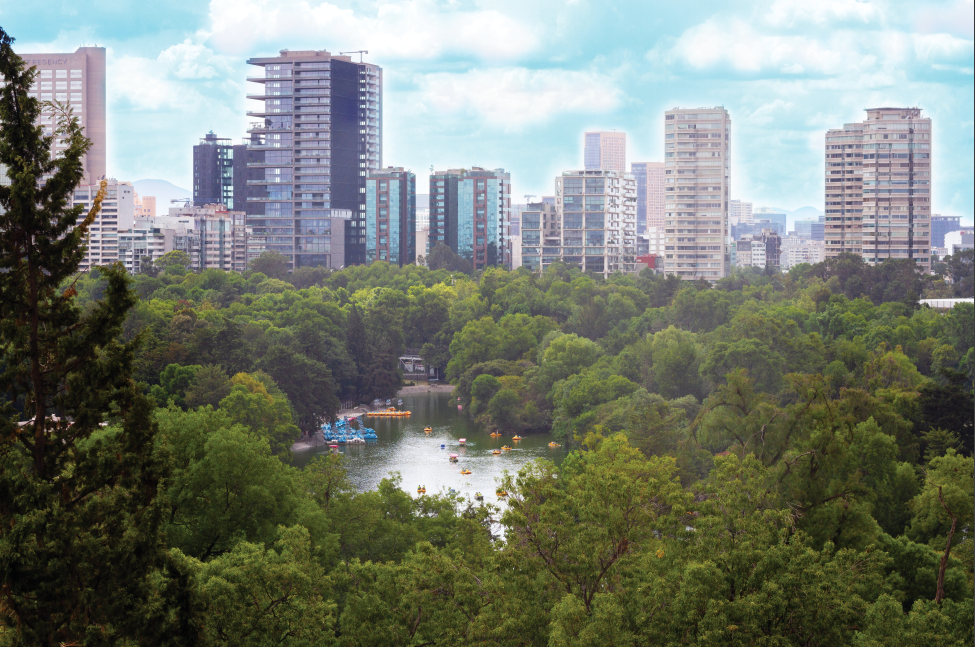
From here you can walk through the main path lined on both sides with vendors. It will lead you to the lake where you can rent a paddleboat for a few dollars an hour. It’s a fun way to spend a sunny afternoon and you can see a different view of the park this way.
Report this ad
If it’s a sunny day, try out one of the paddle boats on the lake. It’s really cheap – only 50 pesos for an hour ($2.50).
There are tons of places to try Mexican snacks and antojitos. Definitely have some Chicharron (fried pig skin) with all the toppings!
The Reform War, also known as the Three Years’ War, was a civil war that took place in Mexico from 1858 to January 10, 1861.1 The nation was divided into two major groups: Liberals and Conservatives; both fought for their ideals. The Mexican transformation is attributed to the transition of the political structure in which it sought to establish a democratic capitalist system and put an end to the one that had existed since the Colony and the Empire. In this new system, a national state was formed based on constitutional order, the Mexican people’s need for restructuring by trying to end the privileges of the ruling classes (equality before the law), the reactivation of the economy and the restoration of labor.2 For a time, the liberals and conservatives had parallel governments, with the conservative government based in Mexico City and the liberals in Veracruz.3
As the years went by, the war became bloodier and polarized the people in the nation. The war ended with the definitive defeat of the conservatives at the Battle of Calpulalpan, State of Mexico4 in 1861, and with Benito Juárez installing his administration in Mexico City. Once the Constituent Congress had fulfilled its task of drafting a new constitution, the call was made to hold elections for both federal and state powers. Thus, the first Congress was convened, which would work under the principles of the Magna Carta of 1857. The country had been indebted by both sides, this situation led to the suspension of the payment of foreign debt, which added to the attempts of the defeated party to obtain support in Europe and the interests of different European powers led to the creation of the London Convention, which in turn led to the Second French Intervention.
Both conservatives and liberals agreed that in order to overcome the political crisis, change had to be promoted.5 The Ayutla Revolution, led by Juan Álvarez in 1854, was a revolt as a consequence of the birth of new ways of thinking with the objective of establishing a liberal government and the weariness of Mexican society with the regime of Antonio López de Santa Anna.6
One of the laws that went into effect in 1856, La Ley Lerdo is the nickname given to the Law of Disentailment of the Rustic and Urban Farms of the Civil and Religious Corporations of Mexico. It was issued on June 25, 1856 by substitute president Ignacio Comonfort. This law caused enormous discontent among certain sectors of the population because, from their point of view, it attacked the Catholic religion, which was the belief of the majority of the country. With the Tacubaya Plan, directed by Félix Zuloaga, it was stipulated that the current Constitution would cease to be in force and that Comonfort would remain at the head of the Executive power, limited by the conservatives, to repeal the liberal reforms, to which he refused; the plan also called for an extraordinary congress that would draft a new constitution “in accordance with the national will”, in the meantime dismissing all those authorities that did not support this plan. Part of Comonfort’s team of collaborators resigned from their posts, while Benito Juárez, president of the Supreme Court, Isidro Olvera, president of the Congress, and some deputies were taken to prison.7 Comonfort tried to seek reconciliation with the liberal party; he imprisoned Juárez and carried out armed confrontations against the conservatives, in which he would come out badly. Given the futility of his resistance, he decided not to continue the struggle and abandoned the country, leaving it immersed in a civil war.

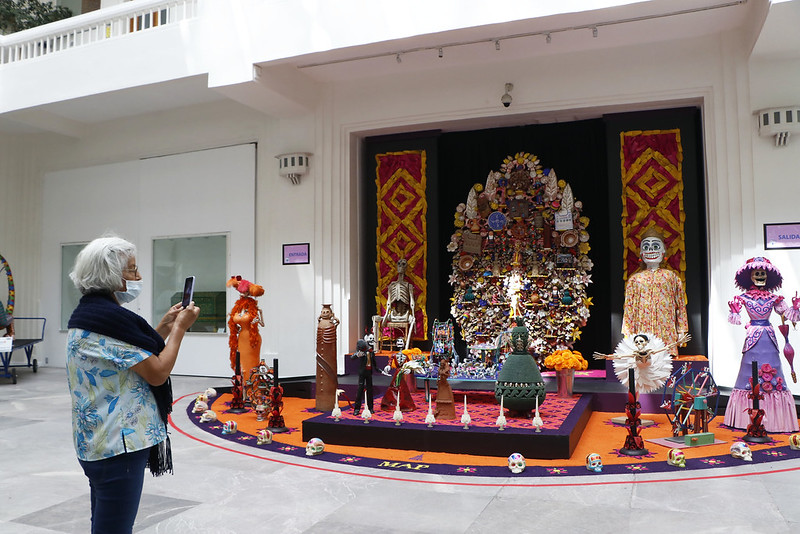
Photos: Secretaría de Cultura de la Ciudad de México, Attribution-ShareAlike 2.0 Generic (CC BY-SA 2.0)
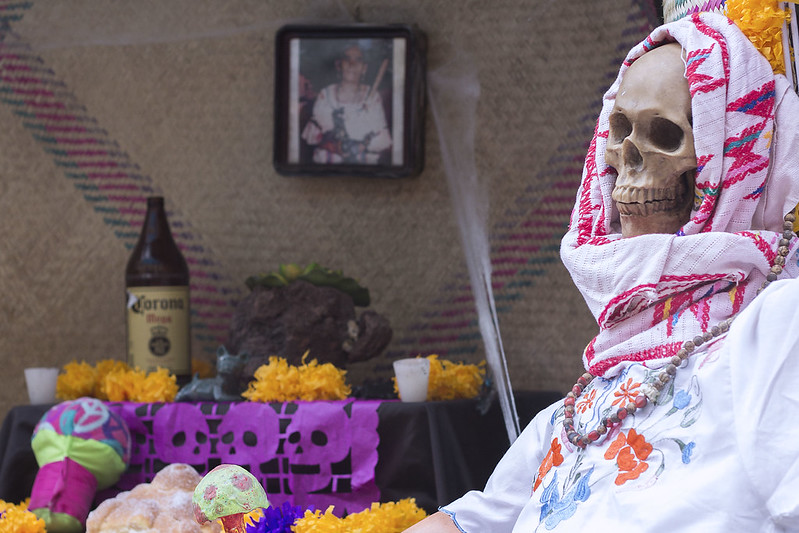
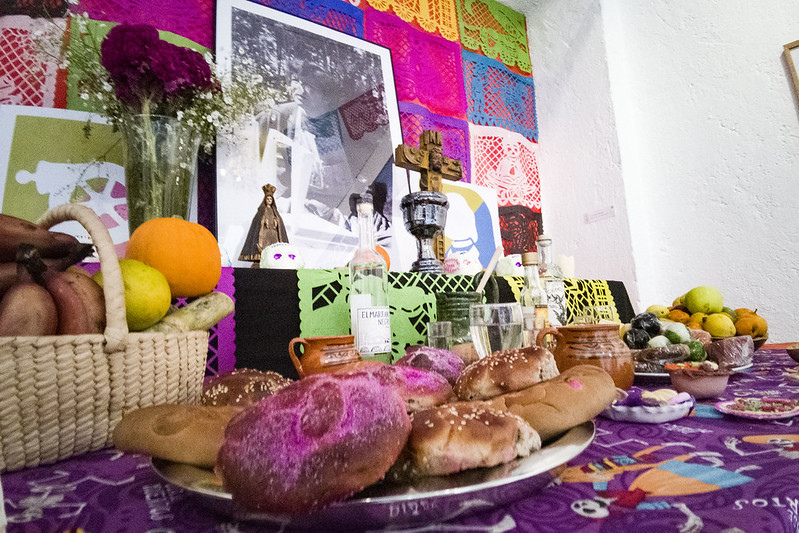
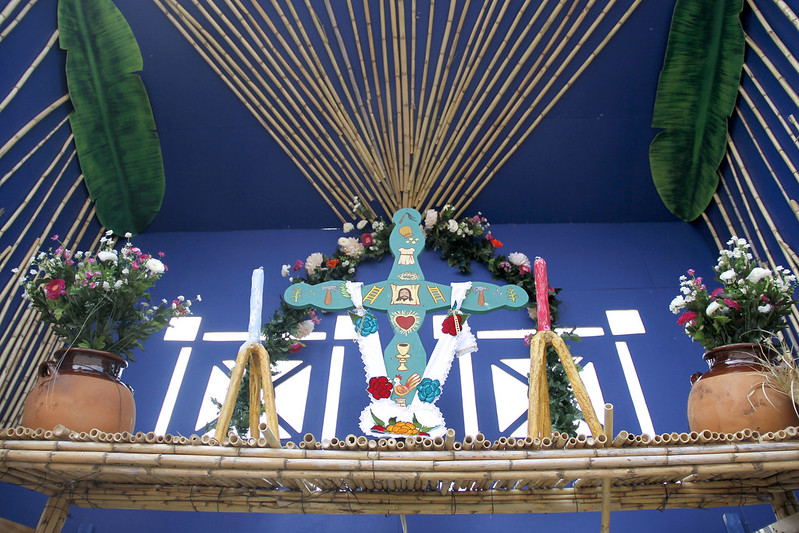
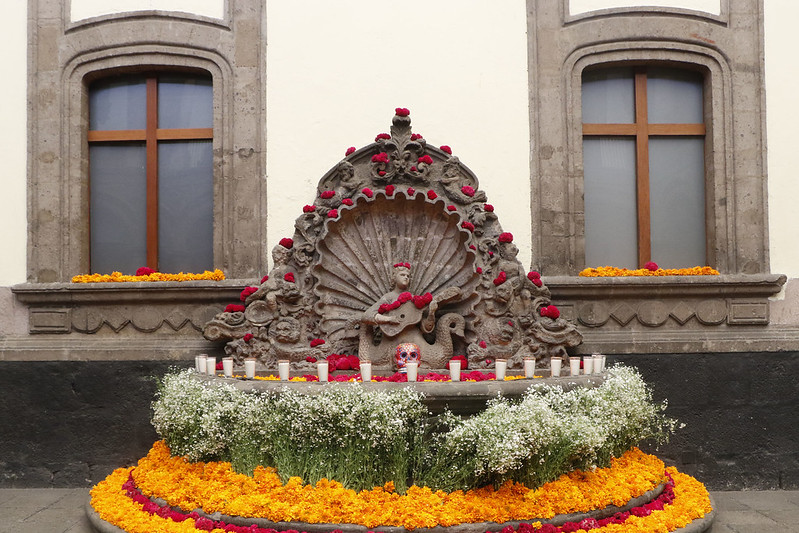
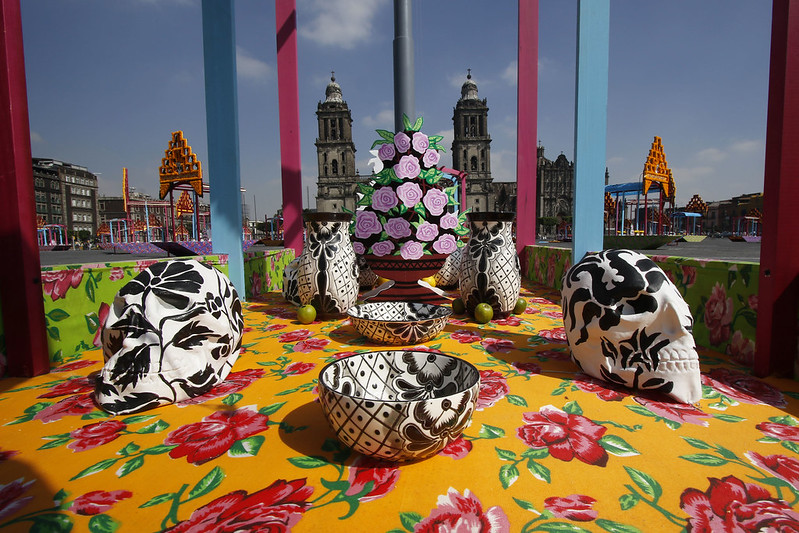
The placement of an ofrenda, the “altars to the dead” seen throughout central Mexico during this season, is one of the most important ceremonies of the Day of the Dead rite. Several days in advance, people make preparations by purchasing whatever is used to honor the dead.
While the ofrendas are being set up, family and friends of the deceased will chat, pray, and recount events in the lives of those in whose honor the ofrenda is being placed.
The basic components that give meaning to the ofrendar are as follows:
Water. Ancient Mesoamericans considered it an element of life. They offered it to mitigate thirst because it was believed that the dead arrived thirsty after their long journey. Today, it also provides a sense of purification.
Bread. This is a fraternal food offered to friends, siblings. In ancient times, wheat was unknown, but food was offered with ubiquitous corn, including “gorditas.”
Today, many people still make their own bread to be included in the ofrenda. Generally, this is baked in two forms:
In addition to the bread, the ofrenda will usually include the following:
Salt. An element of purification, salt prevents the corruption of the body.
Candles. During the ancient period, ocote was burned as an offering to the dead. Until fairly recently it was still burned in the entrance areas of homes in the absence of wax candles. Today, candles are placed and the light they radiate means that there is faith and hope that the dead will follow the right path. In cemeteries, candles also serve to illuminate a return to the afterlife for the dead who’ve come to greet us.
Cempasúchil and other Flowers. Flowers serve as symbols of love, gratitude, and friendship. White flowers are offered for children because they signify youth and purity. The cempasúchil (marigold) has a longer history and reminds us that the god, Tonatiuh is associated with the “noonday sun.” In legend, the marigold was presented to mortals at the request of the god Tenoch who saddened by the numbers of dead after the fall of Tenochtitlan. Attentive to Tenoch’s request, Tonatiuh covered the fields in the the golden flowers.
Toys. During the ancient period, the dead were buried with their possessions so that they might use them on their journey to the afterlife. They were often also buried with a dog, “izcuintle” who assisted them in crossing the mighty river that led to Mictlan, the underworld. Clay dog toys are often included and children are still sometimes buried with similar clay figures.
Incense. Incense is intended as the fragrance of reverence. It was used to worship rulers and to ward off evil spirits. Today, incense is used to elevate prayer, and to transmit the intentions, songs, and prayers through the copal smoke to the departed.
The petate. The petate is a mat or rug that serves as a placesetting for the entire altar. It symbolizes the shroud of death but also can be part of the table where the ofrenda takes shape. Today it also symbolizes a place where the souls of the deceased share drinks, food, and festivity.
All of this is complemented by sweets, tobacco, tequila, and mezcal and anything the deceased enjoyed when they were alive. Seasonal fruits can include oranges, cane, apples, and even full meals like michmole, mole, and chili tamales.
Info. del folleto: Flores Blavier, Patricia, Estela rojas Noguéz,
Culto a los fieles difuntos Mixquic, Tláhuac, 1993