An undisputed emblem of world sport, the legendary venue historically known as Estadio Azteca begins a brilliant new era under the official name of Estadio Banorte. Inaugurated in 1966, with a design by architects Pedro Ramírez Vázquez and Rafael Mijares, this stadium was conceived to emulate the volcanoes surrounding the Valley of Mexico. Recent transformations, driven by the 2026 FIFA World Cup, have completely modernized its facilities, equipping it with cutting-edge technology to make history by becoming the only stadium in the world to host three World Cup tournaments, where it will temporarily adopt the name Estadio Ciudad de México. The lower ring was completely rebuilt to bring fans closer to the pitch, a sustainable roofing system was implemented, VIP areas and dressing rooms were modernized to European standards, and state-of-the-art LED lighting was installed.
Monumental figures and unparalleled attendance records attest to the grandeur of its stands, hosting moments that will be difficult to replicate, and where its current capacity has been adjusted to 87,000 seats. Astonishing crowds have packed the venue in the past, reaching an impressive 132,247 spectators during the boxing match between Julio César Chávez and Greg Haugen in 1993. Sporting feats like the 1971 Women’s World Cup final between Mexico and Denmark drew 110,000 fans, an all-time record for women’s soccer, while international friendly matches of the Mexican national team drew crowds of nearly 120,000 in the 1960s.
Massive musical performances have found in this concrete giant the ultimate stage for the rise of international stars. Historic shows like Michael Jackson’s five sold-out nights in 1993 set a cumulative attendance record that remains unbroken. Contemporary artists have continued this tradition of sold-out shows, most notably Karol G’s three consecutive successful nights in 2024 and Bad Bunny’s global impact in 2022. The stadium’s imminent reopening ensures the continuation of these grand celebrations, shaping its official schedule.
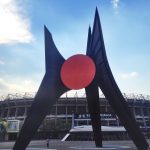
Guarding the main concourse, the majestic sculpture The Red Sun, an imposing work by American artist Alexander Calder created for the 1968 Olympic Games, welcomes the new generations who continue to fill the venue every week.
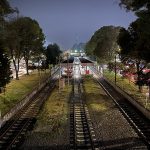
New urban mobility trends define the contemporary visitor experience, aligning with strict international sustainability standards that prioritize public transportation.
 estadioazteca@televisa.com.mx
 +52 (55) 5487 3100
 https://www.estadiobanorte.com.mx/
Nearest at 0.26 kms.
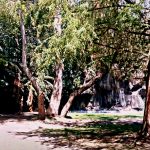
Nearest at 0.33 kms.
Nearest at 0.42 kms.

An all but forgotten island of the ancient Texcoco Lake . . .
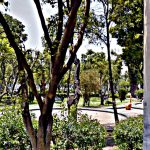
A charming neighborhood park in Tlalpan . . .
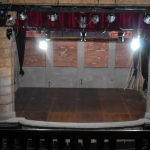
An exceptional mini-theater district in the heart of Churubusco . . .

A 24-hour flower market in a busy corner of Tlalpan's hospital district . . .
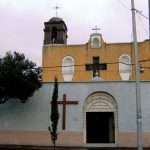
A tiny chapel recalls the long history of the Colonia Tránsito . . .