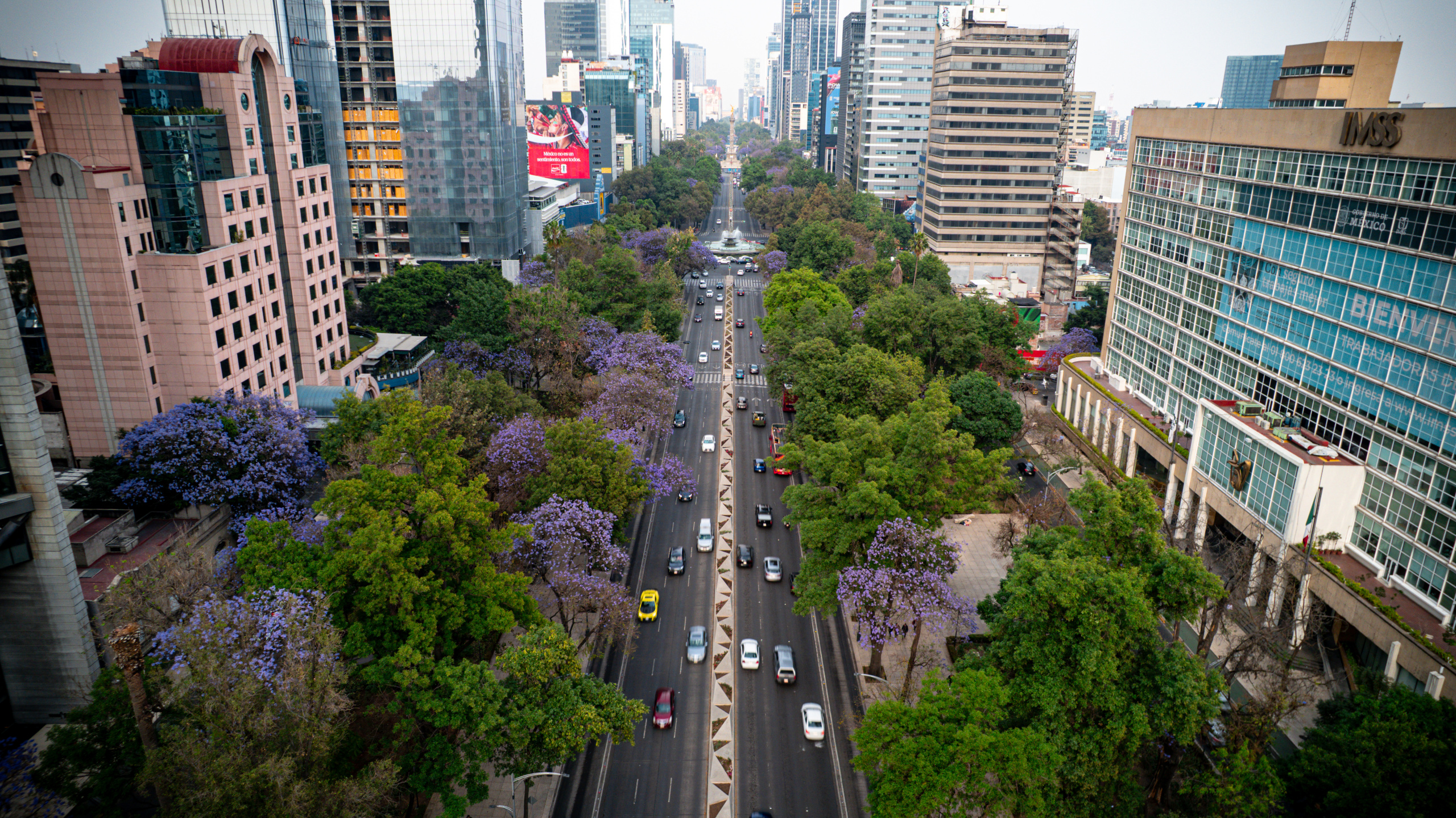
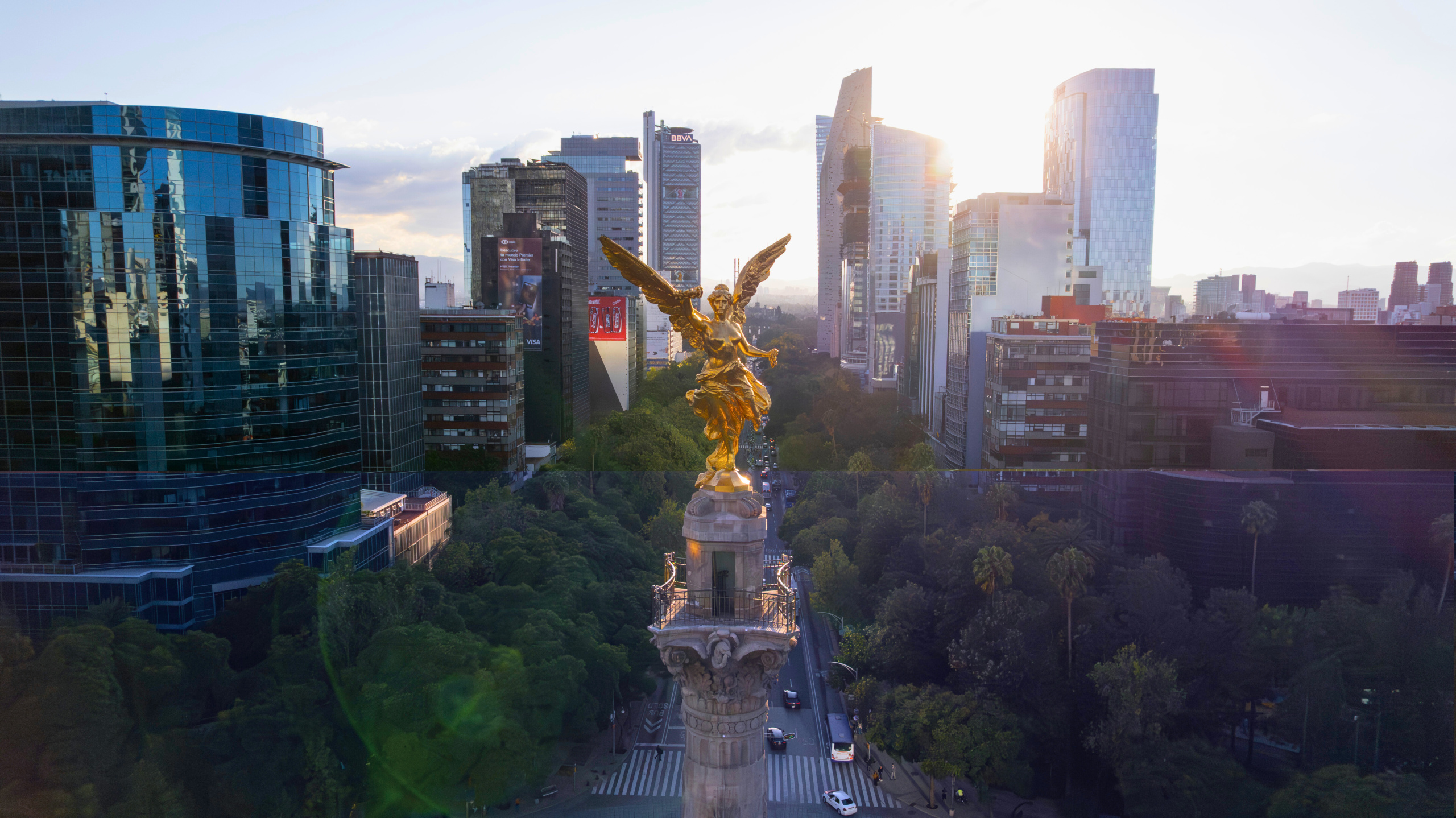
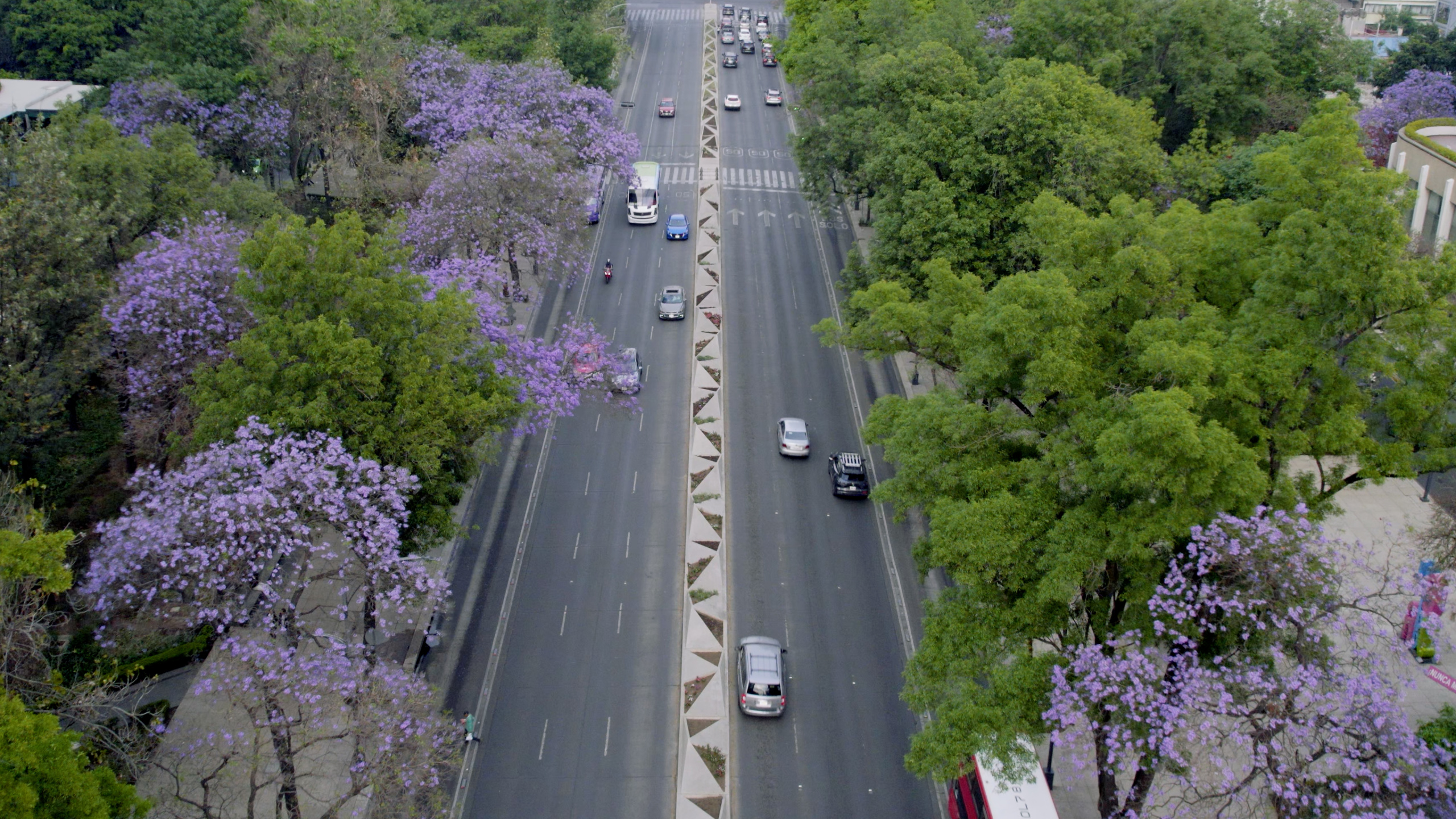
An undisputed symbol of the Mexican capital, Paseo de la Reforma runs through the heart of the metropolis as a living testament to its urban evolution. Maximilian of Habsburg commissioned the design of this monumental avenue in the 1860s—originally named “Paseo de la Emperatriz”—with the aim of connecting Chapultepec Castle to the entrance of the historic center, emulating the grand European boulevards. Subsequent decades brought the triumph of the Republic and a name change that immortalized the laws of Benito Juárez, transforming an imperial layout into the backbone of Mexican modernity.
Today, contemporary glass-and-steel skyscrapers flank this grand corridor, creating a spectacular architectural dialogue with the century-old roundabouts that set the rhythm of the capital. Iconic monuments of national identity, such as the Angel of Independence, the Diana the Huntress fountain, and the statue of Cuauhtémoc, serve as immovable guardians of the ceaseless flow of citizens. World-class financial corporations have chosen this site to erect colossal buildings, cementing the avenue’s status as the most imposing and cutting-edge business district in all of Latin America.
On Sunday mornings, the atmosphere along this thoroughfare changes dramatically thanks to the car-free Sundays, returning the streets to thousands of cyclists, runners, and entire families who enjoy the majestic scenery at a leisurely pace. Huge crowds also flock to this space during the country’s most important festivals, turning it into a natural stage for monumental parades, international marathons, and civic events of all kinds. This blend of economic power, public art, and social engagement confirms that strolling along its wide, tree-lined sidewalks is the ultimate way to feel the true pulse of Mexico City.
Nearest at 0.14 kms.

Nearest at 0.15 kms.
Nearest at 0.15 kms.