In the Historic Center of Mexico City, facing the Templo Mayor archaeological zone, the Textile Museum of Indigenous and Afro-Mexican Peoples (MUT) offers an approach to the country’s cultural diversity through one of its oldest artistic expressions: textile art. Inaugurated in June 2026, this venue centers on the knowledge, techniques, and creativity of Indigenous and Afro-Mexican communities, recognizing the work of the artisans who keep these traditions alive and transform them generation after generation.
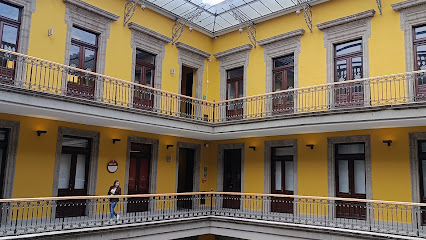
The museum is located in the historic Casa del Marqués del Apartado, a neoclassical building constructed between 1795 and 1805, attributed to the architect Manuel Tolsá. Thus, the visit brings together two dimensions of Mexican heritage: the architectural history of the Historic Center and the richness of textile traditions. The building also preserves an archaeological window that allows visitors to observe pre-Hispanic vestiges found underground, a reminder of the different eras that converge in this area of the capital.
The permanent exhibition gathers around 210 pieces and is organized into rooms that explore the materials, procedures, and cultural meanings of the textiles. The tour addresses topics such as the use of natural fibers, indigenous science applied to the loom, dyes, embroidery techniques, and resist-dyeing methods. It also examines the relationship between the weavings, the natural environment, community memory, and ceremonial practices.
The MUT also establishes a dialogue between traditional techniques and contemporary expressions. Its spaces for temporary exhibitions allow for the exploration of new artistic proposals and encounters between creators, researchers, and artisan communities.
The experience extends beyond the exhibition rooms. The museum features a playroom and spaces designed for socializing and learning, as well as areas for workshops and educational activities. These facilities seek to bring textile heritage closer to different audiences, including children and families, through resources that allow them to learn about fibers, colors, symbols, and creation processes. Its proposal is especially attractive to those who wish to understand craftsmanship not only as an aesthetic manifestation but as a form of knowledge, identity, and cultural continuity.
Visiting it allows one to recognize the diversity of stories that can be preserved within a woven piece: the origin of its materials, the skill of its maker, the symbols it transmits, and the community that keeps its tradition alive.
Nearest at 0.02 kms.

Nearest at 0.04 kms.
Nearest at 0.06 kms.