
MexicoCity
.cdmx.gob.mx

--
--:--
☁️ --°
< Regresar

Basilica of Guadalupe and La Villa

Considered the second most visited Catholic venue in the world—only behind St. Peter's Basilica in Rome—the Basilica of Santa María de Guadalupe is the epicenter of faith and religious tourism in Mexico.

The complex sits at the foot of the Tepeyac hill, a site of profound spiritual relevance that, long before the conquest, already gathered Mesoamerican peoples to venerate maternal deities like Tonantzin, consolidating a fascinating cultural syncretism in the country.

The sanctuary's history dates back to 1531, when, according to tradition, the Virgin appeared on four occasions to Juan Diego Cuauhtlatoatzin.

What began as a modest adobe hermitage—whose first foundations are still remembered in the Parish of Indians—evolved over the centuries.

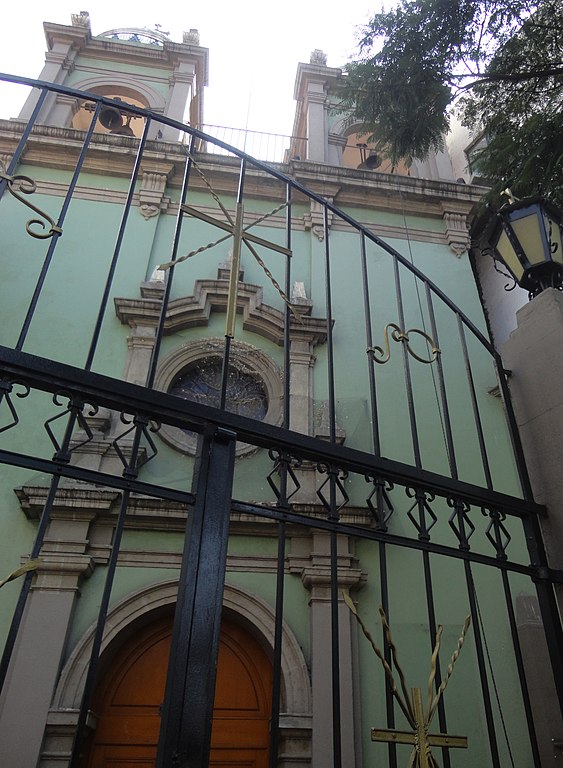
In the 18th century, architect Pedro de Arrieta built the Old Basilica (1695-1709), a Baroque-style jewel that today functions as the Expiatory Temple to Christ the King and amazes travelers with its domes and altarpieces.

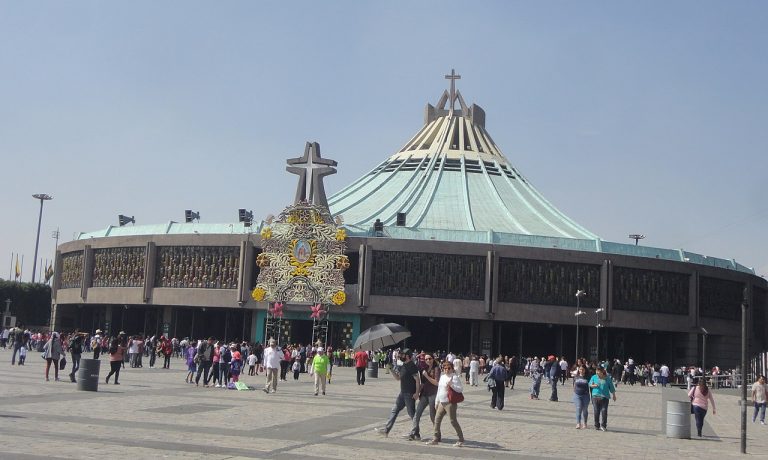
In 1976, the New Basilica was inaugurated. Designed by architect Pedro Ramírez Vázquez, this imposing circular structure features an oxidized copper roof that emulates the Virgin's mantle.

Its avant-garde interior design, free of columns, allows the sacred tilma to be visible from any point in the venue, guaranteeing a continuous and safe flow for the thousands of parishioners and international tourists.

The polygon surrounding the temples, popularly known as La Villa, offers a total immersion into capital popular culture.

Arriving via the Calzada de Guadalupe or the historic Calzada de los Misterios with its viceregal buildings is the perfect prelude to exploring architectural jewels like the Capilla del Pocito.

The visit is completed by touring the La Villita Handicraft Market and the traditional food markets in the area, to taste Mexican antojitos and the classic gorditas de nata wrapped in colored paper.

1 - 12 of 15

Axolotl Chat