The starting point for tracing the capital's dance scene is found in the Guerrero neighborhood. There operates the legendary Salón Los Ángeles, a space that dictates the rules of traditional ballroom dancing through live orchestras and acoustic percussion sections. It is the territory of danzón, mambo, and chachachá, where etiquette is respected through tailored suits and flowing dresses, affirming the capital's saying: "Those who do not know El Salón Los Ángeles, do not know Mexico City." Along a very similar line, but in the southern zone, the California Dancing Club in the Portales neighborhood offers a wooden dance floor that eliminates the sale of alcohol from its menu; the focus is strictly on "polishing the floor," with people attending on weekends to move to the rhythm of top-billed cumbia and salsa groups, consuming only water, soft drinks, and snacks. A short distance away, near the Taxqueña transport hub, the Gran Forum operates as an entertainment center where salsa, cumbia, and sonidero groups play live in front of an industrial-sized courtyard. For those looking for something more "underground" in the chilango culture of 1950s nightclubs, the famous Barba Azul in the Obrera neighborhood maintains its red-light and siren aesthetic, preserving the classic dance-by-token system and mixing veteran locals, the LGBT+ community, hipsters, and youth to the rhythm of salsa, cabaret shows, and tropical echoes.
In the Roma Sur neighborhood, Club San Luis preserves the tradition of mid-century dance halls with orchestras playing Afro-Antillean rhythms in a setting of red upholstery. On Avenida de los Insurgentes Sur, Mambocafé offers a larger-scale format oriented toward salsa, merengue, and bachata with live bands. Salón Candela positions itself as an option for Latin rhythm dancers. If the route points to the Historic Center, Salón Tropicana, located next to Plaza Garibaldi, focuses its dance floor on cumbia and salsa brava in a direct environment with no dress formalities.
On the compass of Antillean percussion, the Roma Norte neighborhood is home to Mama Rumba, a two-story venue with a dense central dance floor where son and Cuban timba groups play at floor level. Nearby, La Bodeguita del Medio recreates the model of Havana's dance houses, combining Creole food and Caribbean music. For an unpretentious salsa neighborhood atmosphere, La Flor del Son has consolidated itself as a sought-after meeting point in the area, El Babalú functions as a specific space for the practice of casino salsa and bachata on a polished wooden floor on the upper level of a traditional bar.
For those looking to travel back in time through retro genres, the city offers very consolidated niches. In the south of the capital, within the San Ángel neighborhood, Cracovia 32 operates as the nerve center for Lindy Hop performers, prioritizing live swing from the thirties and forties in a cultural mansion. On the other hand, for those seeking the energy of classic rock and roll and the rockabilly movement, Be Bops Diner in the Calzada de Tlalpan functions as a soda fountain restaurant and dance floor, decorated with classic cars and checkered floors where live bands demand fast and acrobatic steps.
Swapping acoustic instrumentation for drum machines, the Roma neighborhood hides Patrick Miller, an industrial warehouse that rejects luxury furniture and organizes dance circles to demonstrate High Energy choreographies and disco music under laser lights. For strictly Disco sound and seventies funk, Carmelita Club centers its design around a classic disco ball and programs retro hits that keep the dancing fluid. In a large-format commercial tune, Neon Discoteque in San Ángel revives classic discotheques with illuminated dance floors of colored panels, while on Friday nights Guilt Roma transmutes its space in Roma Sur with the concept "Discoteca", focusing its dance floor on a fusion of House rhythms and classic Disco cuts.
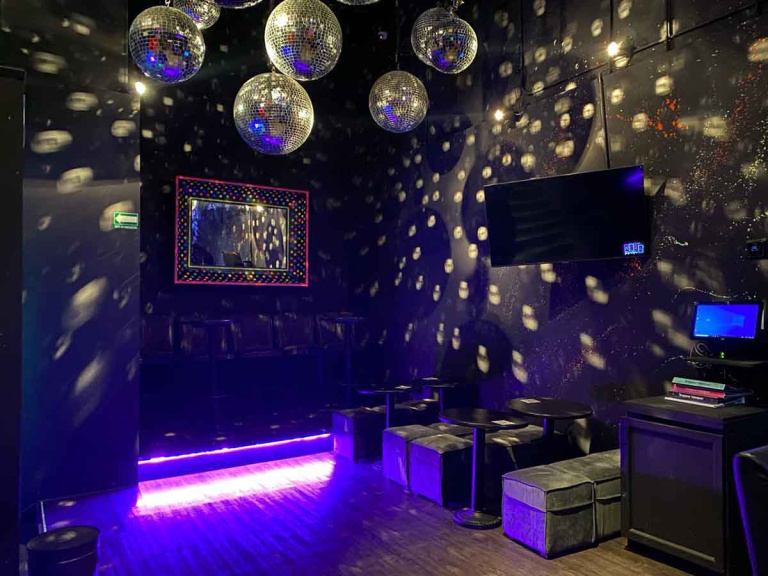
In the specialized electronic music circuit, the map shifts towards the Juárez neighborhood. Yu Yu operates in a basement with strict acoustic specifications for techno and minimal house, prohibiting the use of cell phone flashes on the dance floor. Loo Loo Studio features a main room with powerful sound and LED panels for tech-house, plus an alternate room for urban music. In the Hipódromo neighborhood, Fünk Club offers careful acoustics for house and nu-disco with a high-fidelity Funktion-One system. M.N. Roy, in Roma Norte, requires strict reservations and focuses on underground house inside an old mansion clad in geometric wood. Bar Oriente combines the model of Asian food and private karaoke rooms with an electronic dance floor in the Roma neighborhood, while the Sunday Sunday collective takes advantage of the Historic Center's terraces to offer outdoor afternoon house parties on Sundays.
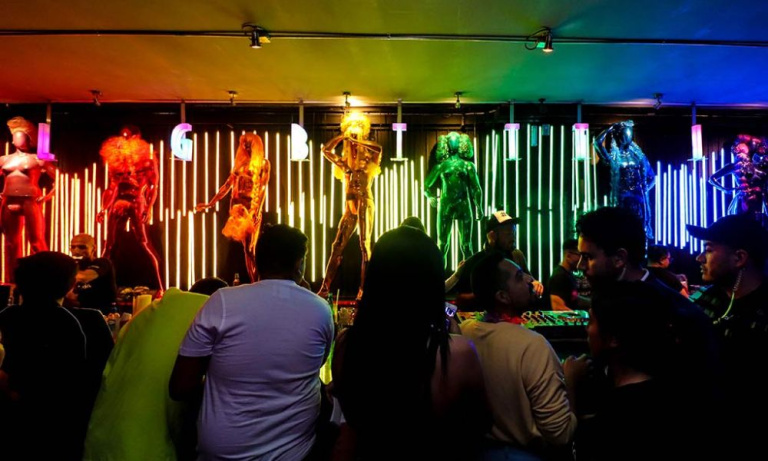
The massive commercial circuit is concentrated in clubs like Bar 27 in the Pedregal, which caters to a university crowd with current pop through consumption bracelet dynamics, or La Santa in Polanco, where reggaeton and electronic remixes control the dance floor under a formal dress code and premium bottle reservations. Finally, the Historic Center safeguards spaces of freedom and commercial pop: La Purísima uses an irreverent neon aesthetic to summon a human tide shoulder to shoulder, while Soberbia stands out as an LGBT+ community bar where urban rhythms coexist with a decoration of mannequins and the dress code is completely free.


 Av. San Jerónimo 240, La Otra Banda, Coyoacán, 04519 Ciudad de México, CDMX
 Theatrical City