


Iztapalapa
The name of the demarcation comes from Nahuatl and translates as "in the water of the flagstones," referring to its ancient strategic position on the shores of Lake Texcoco. Before Mexica rule, the site functioned as a fundamental lordship governed by Cuitláhuac, a key piece in the resistance against the conquest. The official foundation of the demarcation as a municipality occurred in 1862, fully integrating into the city's political structure and preserving to date its original neighborhoods that guard a solid community identity.
The Representation of the Passion of Christ constitutes the most important cultural and religious event in the area, attracting millions of visitors each year during Holy Week. Begun in the 19th century, the tradition has its main stage on the Cerro de la Estrella, formerly known as Huixachtécatl. At the top, there is an archaeological zone where ancient inhabitants performed the New Fire ceremony every fifty-two years, a ritual that symbolized the renewal of the universe and the beginning of a new life cycle for the valley's civilizations.
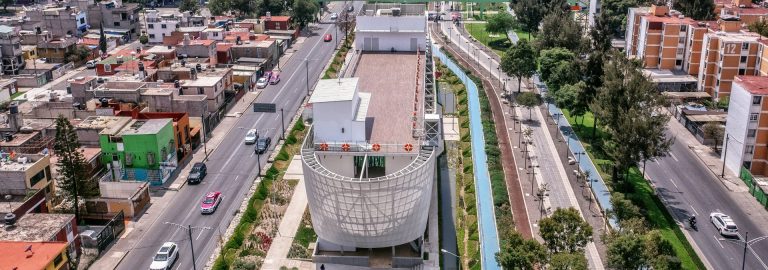
Urban and social innovation defines the present of the borough through the Cablebús system and the Utopías project. Traveling along Cablebús line 2 from above allows admiring thousands of murals that have transformed rooftops into a mosaic of color. Spaces like the Barco Utopía, a boat-shaped building, offer immersive digital experiences on oceanography and environmental care, while the Utopía Meyehualco houses the Iztapasauria theme park, where monumental moving dinosaur replicas surprise visitors of all ages.
Large-scale green areas provide unique recreation options in the eastern sector of the metropolis. Parque Cuitláhuac, built on what was previously a landfill, functions today as an example of ecological recovery with professional skate parks, artificial lakes, and picnic areas. The Culhuacán Site Museum, located in the old 16th-century Ex-Convent of San Juan Evangelista, guards the historical memory of the demarcation and the heritage related to local traditions.
The Central de Abasto (CEDA) stands out as the largest wholesale market on the planet and the nerve center of the national food supply. The complex daily receives tons of fresh products from all over the country, offering a spectacle of commercial dynamism. Located to one side, La Nueva Viga functions as the second largest fish and seafood market in the world, where tourists and locals find the greatest variety of marine species and can taste dishes prepared on the spot.
Traditional flavors and massive festivals consolidate the eastern culinary offer. The Enchilada Fair and the Tamale Fair in the central macro-square rescue recipes from the original neighborhoods, using ingredients like nopal and corn in ancestral preparations. Local establishments and markets serve barbacoa and classic antojitos that reflect the homemade flavor of the area.
1 - 12 de 15 lugares