

Cuauhtemoc
Cuauhtémoc concentrates the political power, archaeological wealth, and foundational core of the Mexican capital. Baptized in honor of the last Mexica tlatoani, whose Nahuatl name means "descending eagle," the demarcation covers exactly the territory where the ancient cities of Tenochtitlan and Tlatelolco were erected. Officially constituted as a delegation in 1970, the area safeguards in its subsoil centuries of history that coexist daily with the capital's rhythm.
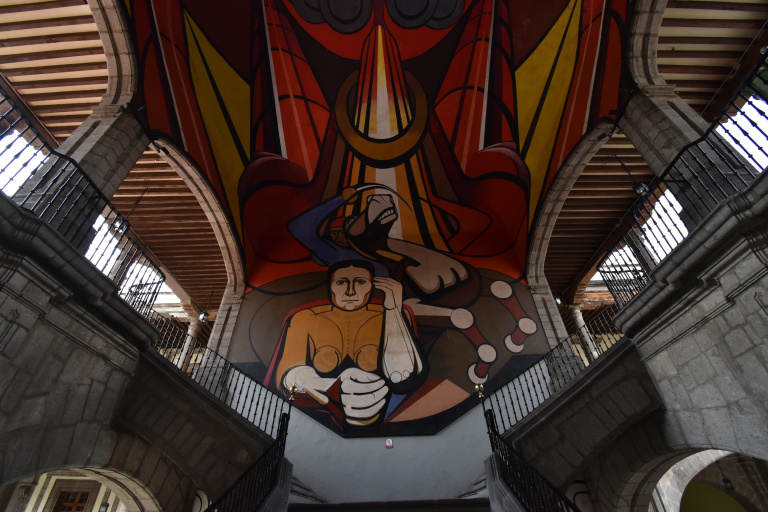
The Historic Center functions as the heart of the metropolis and holds the title of World Heritage Site. Walking across the Zócalo square allows you to admire the Metropolitan Cathedral, an architectural jewel whose construction began in the 16th century, and the National Palace, seat of the executive power that houses invaluable murals. To one side, the Templo Mayor archaeological zone exhibits the vestiges of the main Mexica ceremonial center, offering visitors a direct journey to the country's pre-Hispanic past.
Emblematic avenues and large-scale monuments trace the geography of the western sector of the borough. Paseo de la Reforma crosses the territory outlining a top-level financial and tourist corridor, crowned by the Angel of Independence and the Diana the Huntress fountain. Very close to there, the Plaza de la República serves as the base for the imposing Monument to the Revolution, whose original structure, conceived to be the legislative palace, today guards the remains of the main leaders of the revolutionary movement.
Deeply rooted neighborhoods like Roma, Condesa, and Santa María la Ribera contrast with the sobriety of the center. Walkers enjoy the frank design, the wide tree-lined medians, and the iconic Moorish Kiosk, neighborhoods built in the late 19th and early 20th centuries. The Alameda Central, considered the oldest public park in the Americas, shines in the urban environment and serves as a pedestrian prelude to admire the main artistic venue of the country, the Palace of Fine Arts.
Flavors from all regions of the country and international cuisine are found in the streets of this borough. The San Juan Market attracts thousands of palates thanks to its offer of exotic ingredients, unconventional meats, and imported cheeses. Centennial cantinas in the historic center keep alive the tradition of offering abundant snacks to diners, while the pedestrian corridors of the Roma neighborhood group modern bistros and specialty coffee shops that set current gastronomic trends.
1 - 12 de 15 lugares