 Milpa Alta is the city’s agricultural epicenter, a territory of mountainous landscapes where culinary tradition is transmitted as a family legacy.
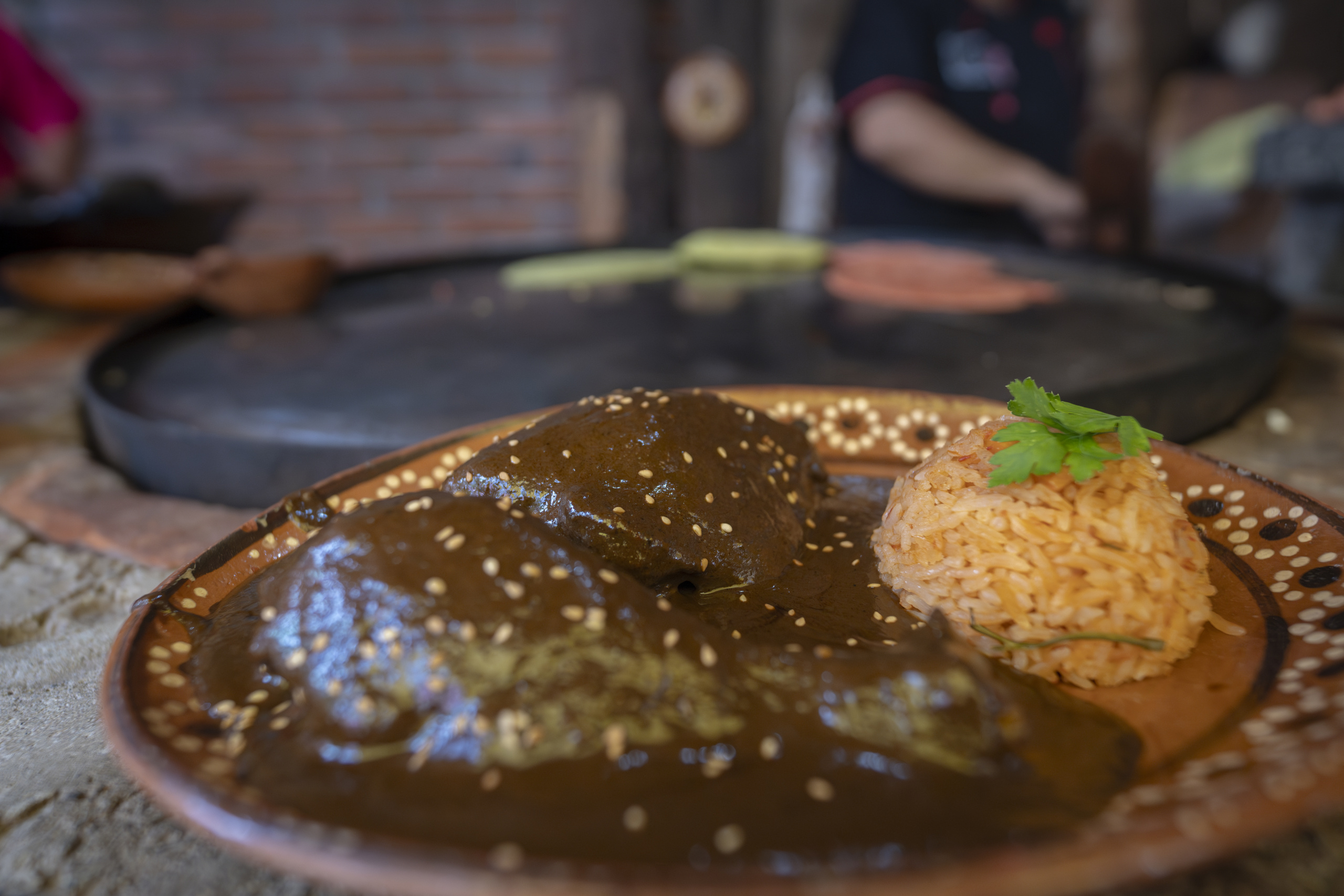
Its gastronomic fame is concentrated in the native town of San Pedro Atocpan, nationally recognized for the artisanal elaboration of mole.
This community produces approximately sixty percent of the mole consumed in Mexico and the vast majority distributed in the capital, consolidating itself as one of the country’s most important gastronomic centers.
Walking its streets implies entering an environment impregnated by the aroma of toasted dry chilies, chocolate, cinnamon, clove, and sesame.
The region’s emblematic dish is the almond mole, an original specialty of San Pedro Atocpan itself, prepared with a complex mixture of ingredients and traditionally served over pieces of turkey or chicken, accompanied by bean tamales.
Family restaurants line the local highways preserving recipes passed down through generations; this activity reaches its peak influx every October during the National Mole Fair, an annual gastronomic celebration gathering thousands of visitors and reaffirming the community’s culinary identity.
Options to taste this tradition abound in the area, highlighting historic restaurants like Mole Don Pancho, a local reference for its family heritage cuisine.
There are also community projects and rural cooperatives offering products derived from the Milpa Alta countryside, such as preserves, jams, pickles, and artisanal beverages made with locally grown ingredients, reflecting the close relationship between gastronomy and local agriculture.
Those seeking an experience closer to the origin of the food can participate in agrotourism tours organized by producers and traditional cooks.
Nopal and native corn fields are visited during these journeys, where one learns about processes like nixtamalization and interacts with families dedicated to beekeeping and rural cooking.
Experiences like these allow understanding the deep bond between territory, cultivation, and food defining Milpa Alta’s identity.
Community celebrations and traditional routes reinforce the defense of the local economy and cultural heritage.
Noteworthy are the rural tourist routes of the Milpa Bus, an initiative connecting visitors with maguey fields and productive spaces showing the ancestral work of the tlachiqueros and the making of pulque.
Milpa Alta thus remains an enclave where agricultural practices, original flavors, and ways of life safeguarding the rural gastronomic spirit of Mexico City survive.